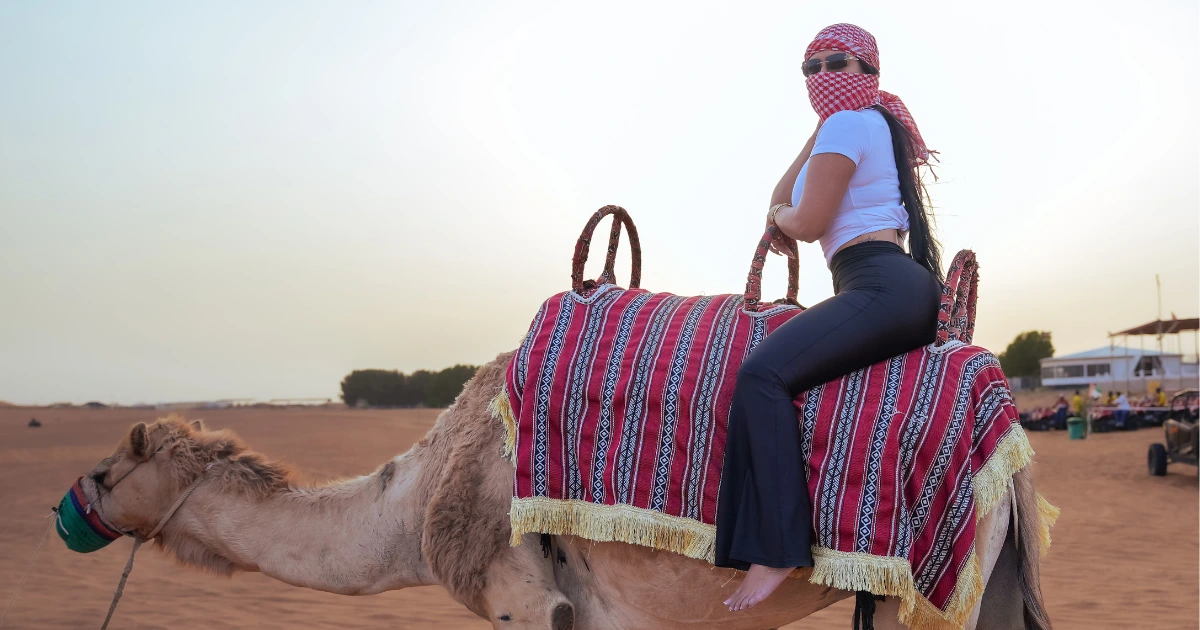
Wearing a scarf during a Dubai desert safari protects your face from blowing sand, dust, strong winds, and direct sunlight, making outdoor activities much more comfortable.
Whether you are going quad biking, riding a dune buggy, or exploring the desert, a lightweight scarf is one of the most useful things you can pack.
Many first-time visitors think scarves are only worn for photos or to experience traditional desert clothing. In reality, they are a practical part of your desert safari outfit and can make a noticeable difference during your trip.
In this article, we’ll explain why face protection is important in the desert, when you’ll need a scarf the most, how to choose the right one, different ways to wrap it, common mistakes to avoid, and why a simple scarf can improve your overall desert safari experience.
Why Face Protection Matters in the Desert
Protecting your face is important because the desert is an open environment where you are constantly exposed to wind, dust, sand, and direct sunlight.
Unlike the city, the weather in the desert can change quickly. A calm afternoon can become windy within a few minutes, and in some cases, strong winds can carry fine sand across the dunes. Although sandstorms are not common during every safari, they can happen, especially on windy days. Wearing a scarf helps protect your face if the weather suddenly changes.
A scarf also helps keep sand away from your nose and mouth. This becomes especially useful during activities where you are moving through the desert at higher speeds.
Most desert safari activities take place in the open desert. Quad biking, dune buggy rides, sandboarding, camel rides, and even walking across the dunes expose you to dry air, blowing sand, and strong sunlight. Covering your face with a lightweight scarf helps you stay more comfortable throughout these activities.
When Will You Need a Scarf the Most?
You will notice the need for a scarf most during outdoor desert activities where you are directly exposed to the wind.
Some of the activities where a scarf becomes especially useful include:
- Quad biking
- Dune buggy rides
- Sandboarding
- Camel rides
- Walking through the open desert
- Photography on the dunes
During quad biking and dune buggy rides, the combination of vehicle speed and desert wind can blow fine sand directly towards your face. Even if the weather looks calm, moving through the dunes creates enough airflow to make face protection useful.
During camel rides and while exploring the dunes on foot, the scarf helps reduce exposure to dust, dry wind, and direct sunlight.
Many travelers only realize they need a scarf after their first outdoor activity. Carrying one from the beginning allows you to enjoy every part of the safari more comfortably.
What Type of Scarf Works Best for a Desert Safari?
Not every scarf is suitable for the desert. The best choice is one that is lightweight, breathable, and easy to secure.
Here are some of the best options:
| Scarf Types | Why it works well |
| Cotton scarf | Lightweight, breathable, and comfortable in warm weather |
| Linen scarf | Soft, breathable, and dries quickly |
| Shemagh | Designed for desert conditions and provides good coverage for the face, neck, and head |
| Long rectangular scarf | Easy to wrap in different styles and stays secure during activities |
Avoid thick winter scarves because they can become too warm during the day.
Fashion scarves made from satin or other slippery materials are also not recommended. They do not stay in place during quad biking or dune buggy rides and can become uncomfortable in windy conditions.
Simple Desert Scarf Wrapping Method
You do not need to learn complicated wrapping techniques before your safari. A simple wrap is enough to protect your face and stay comfortable.
Follow these steps:
- Fold the scarf into a large triangle.
- Place the longest side in the middle of your forehead.
- Pull both ends behind your head.
- Tie the ends securely behind your neck or over the back of your head.
- Adjust the scarf so it also covers your neck and keeps your hair protected.
- Take any one end of the scarf, cover your nose and mouth, and tie it to the other end.
- Make sure the scarf is secure but loose enough to breathe comfortably.
This method works well for most desert safari activities, including quad biking, dune buggy rides, camel rides, and sandboarding.
Common Mistakes First-Time Visitors Make
Many first-time visitors carry a scarf but do not wear it correctly.
Some of the most common mistakes include:
- Wrapping the scarf too tightly, making it uncomfortable to breathe.
- Covering only the head while leaving the nose and mouth exposed.
- Tying the scarf too loosely, causing it to come off during quad biking or dune buggy rides.
- Choosing thick fabrics that become hot during the day.
- Wearing satin or slippery fashion scarves that do not stay in place.
A lightweight scarf that fits properly will always be more comfortable than a thick or decorative one.
More Benefits of Wearing a Scarf in the Desert
Many travellers think a scarf is only useful for keeping sand away from their face. In reality, it has several practical uses throughout the safari.
- It helps protect your skin from direct sunlight during outdoor activities. It also reduces exposure to dry desert winds, which can make your face and lips feel dry after spending several hours in the open desert.
- The scarf also protects your hair from dust and blowing sand, especially during faster activities like quad biking and dune buggy rides.
- After sunset, the temperature starts dropping, particularly during the winter months. The same scarf can be wrapped around your neck or ears to provide extra warmth while sitting at the desert camp or watching the evening performances.
One simple scarf can keep you comfortable from the beginning of the safari until the journey back to your hotel.
Should Children Wear a Scarf Too?
Yes, older children can also benefit from wearing a lightweight scarf during a desert safari.
A scarf helps protect them from blowing sand, dry winds, and direct sunlight during outdoor activities. It can be especially useful during camel rides or quad biking as passengers or while walking through the desert.
Choose lightweight fabrics such as cotton or linen, and wrap the scarf not too loose or too tight so it remains comfortable. Avoid covering very young children’s faces completely, as this may make them uncomfortable.
The goal is to protect them from the desert conditions while allowing them to breathe easily.
Can You Buy a Scarf at the Desert Camp?
Yes. Most desert camps have small shops or local vendors selling traditional desert scarves, including shemaghs.
If you are not carrying one, you can usually buy it at the camp, and many vendors will even help you wrap it correctly.
However, buying a scarf at the camp may cost more than purchasing one before your safari. Bringing your own scarf also allows you to use it from the beginning of the trip, especially during quad biking, dune buggy rides, or other activities before reaching the camp.
A scarf is one of the simplest and most useful items you can pack for a Dubai desert safari. It protects your face from sand, wind, and sunlight, keeps you more comfortable during outdoor activities, and even provides extra warmth after sunset.
Whether you are joining a family safari, riding a quad bike, or exploring the dunes for the first time, carrying a lightweight scarf can make your experience much more comfortable.
At Trawey, we always recommend packing a lightweight scarf before your desert safari. It is a small item that can make a big difference throughout the day, especially during activities that take place in the open desert.
Ready for Your Desert Adventure?
Explore Trawey’s Dubai desert safari experiences and prepare for a comfortable adventure with the right clothing and travel essentials.