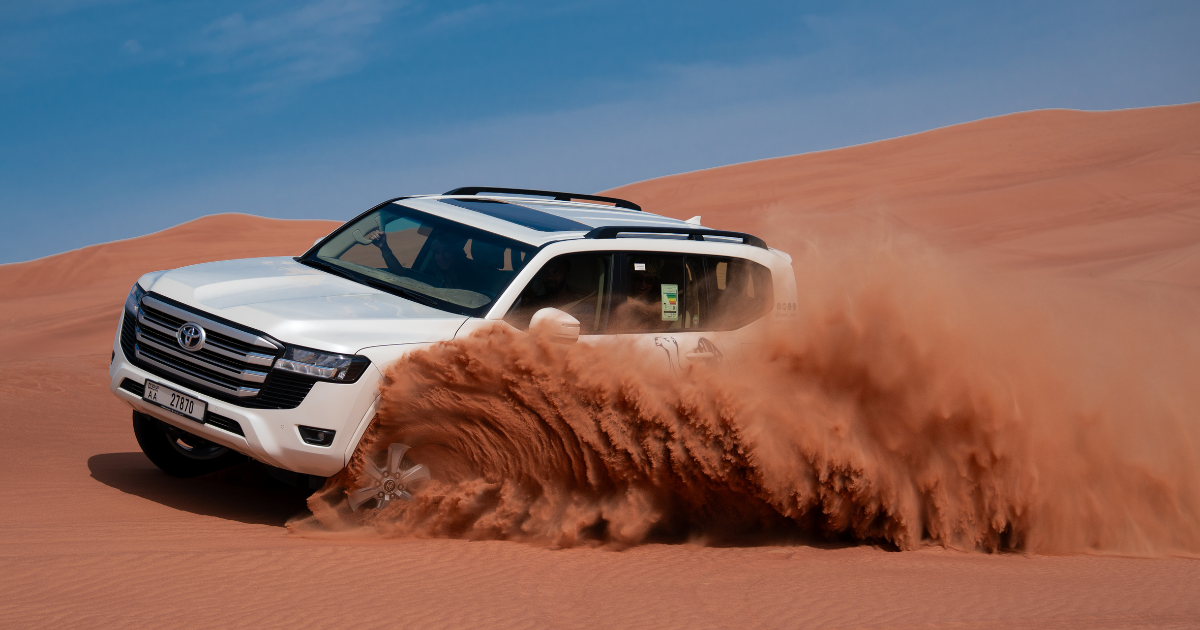
Driving in the desert is very different from driving on normal roads. Desert safari guides must complete specialized off-road driving training and obtain the required licenses before they can take guests into the dunes.
They also learn how to understand desert terrain, handle different weather conditions, operate a 4×4 vehicle safely, respond to basic medical emergencies, and communicate with guests throughout the journey.
Unlike city roads, the desert has no fixed paths or traffic signs. The landscape changes constantly due to wind, shifting sand, and changing weather conditions. This means every dune requires careful judgement, vehicle control, and experience.
A professional desert safari guide is responsible not only for driving the vehicle but also for ensuring every passenger remains safe and comfortable throughout the safari.
In this article, we’ll explain why desert driving requires specialized skills, what defensive driving means in the desert, how safari guides communicate with each other, why tire pressure is reduced before dune bashing, how drivers read the dunes, and the safety protocols followed before and during every safari.
Why Desert Driving Requires a Different Skill Set
Desert driving requires specialized skills because the terrain is constantly changing and behaves very differently from paved roads.
Unlike paved roads, desert sand is soft and loose. The amount of grip changes from one dune to another, making it difficult to control the vehicle without proper training. Wind can also reshape the dunes within a short period, so the route driven yesterday may not be the safest route today.
Professional safari guides learn how to study the terrain before driving. They understand how different types of sand affect the vehicle, how weather conditions influence the surface, and how to choose the safest route across the dunes.
Drivers also need to recognize steep and sudden drops and sharp slopes before reaching them. Maintaining the right speed and vehicle momentum is equally important because stopping or accelerating at the wrong time can affect the vehicle’s stability on soft sand.
Apart from driving skills, guides are trained to handle common situations that may occur during a safari. This includes changing tires, recovering vehicles if they become stuck, performing basic vehicle checks, and responding to minor medical situations until additional help is available if required.
Desert driving requires continuous training, practical experience, and a good understanding of both the vehicle and the desert environment.
What Defensive Driving Means in the Desert
Defensive driving in the desert means driving in a way that prevents problems before they happen.
Instead of reacting to difficult situations at the last moment, professional safari guides constantly observe the terrain ahead and adjust their driving accordingly. Every turn, climb, and descent is planned before the vehicle reaches it.
Drivers maintain a safe distance between vehicles, avoid sudden or unnecessary maneuvers, and choose routes that provide the best control over the vehicle. While dune bashing is designed to be adventurous, it is always carried out within safe limits.
Good vehicle control is another important part of defensive driving. Guides carefully manage speed, steering, and momentum to ensure the vehicle remains stable while traveling across soft sand and steep dunes.
The goal is not to drive as fast as possible. It is to provide an exciting experience while keeping passengers safe throughout the journey.
Why Communication Between Safari Drivers Matters
Communication is an important part of every desert safari, especially when several vehicles are traveling through the desert at the same time.
Safari guides regularly communicate with other drivers to coordinate convoy movements, share updates about the route, and report any changes in desert conditions. This helps every vehicle maintain safe distances and avoid unnecessary delays.
Most safari vehicles are equipped with two-way radios, allowing drivers to communicate even in areas where mobile networks are unavailable. Many operators also use offline GPS systems to monitor vehicle locations and help guides navigate the desert more accurately.
If a vehicle experiences a problem or needs assistance, nearby drivers can be informed immediately. This allows the team to respond quickly while keeping the rest of the convoy informed.
Good communication improves coordination, supports faster assistance when needed, and helps every safari operate more safely from start to finish.
Why Tire Pressure Is Reduced Before Dune Bashing
Reducing the tire pressure increases the surface area of the tire that touches the sand. This spreads the vehicle’s weight more evenly, allowing the tires to stay on top of the sand instead of sinking into it.
Before entering the dunes, safari guides stop to reduce the tire pressure of their vehicles. This is one of the standard safety procedures followed before dune bashing begins.
Lower tire pressure also improves grip and stability while driving across soft dunes. It allows the vehicle to move more smoothly over the sand and reduces the chances of getting stuck.
If the tires remain fully inflated, they dig deeper into the soft sand, making the vehicle harder to control and increasing the risk of becoming stuck.
Once the desert safari is complete, the tires are inflated back to their normal pressure before the journey continues on public roads.
How Drivers Read the Dunes
Reading the dunes is one of the most important skills every professional safari guide develops through training and experience.
Not all dunes are the same. Wind constantly changes the shape of the sand, creating new ridges, slopes, and soft areas every day. Before driving over a dune, guides carefully observe its shape, height, and surface to choose the safest route.
They also learn to identify the difference between soft sand and compact sand. Softer areas can reduce the vehicle’s grip, while firmer sand provides better control during climbs and descents.
Another important skill is recognizing hidden drop-offs and blind crests. Since drivers cannot always see what is on the other side of a dune, they approach these areas carefully and cross them at safe angles to maintain control of the vehicle.
Understanding the dunes helps safari guides provide an exciting experience while reducing unnecessary risks throughout the journey.
Passenger Safety Protocols Before Driving Starts
Before dune bashing begins, safari guides explain a few important safety instructions to every guest.
Passengers are asked to wear their seatbelts throughout the drive and remain seated inside the vehicle until instructed otherwise. Guides also explain that dune bashing includes sudden climbs, descents, and side movements, so passengers should hold the grab handles whenever needed.
Loose items such as cameras, water bottles, bags, and other belongings should be secured properly before entering the dunes. This prevents them from moving around inside the vehicle during the drive.
Before starting the safari, guides also carry out a final safety check. They confirm that everyone is wearing a seatbelt, check the tire pressure after deflation, and ask if anyone feels uncomfortable or has a medical condition such as motion sickness, pregnancy, or back problems that may require a gentler drive.
These simple checks help ensure both the passengers and the vehicle are ready before entering the desert.
How Drivers Adapt for Families, Seniors and Nervous Guests
Every group is different, and professional safari guides adjust the experience based on their passengers’ comfort.
Families traveling with children, senior citizens, pregnant women, or guests with certain medical conditions often prefer a gentler drive instead of a more adventurous dune bashing experience. Guides discuss these preferences before entering the dunes and adjust the route and driving style whenever possible.
If a guest feels nervous or experiences motion sickness during the safari, the guide can slow down, choose easier dunes, or take a short break before continuing.
Professional guides also receive basic first-aid training, allowing them to provide immediate assistance for minor health concerns until further medical help is available if required.
Good communication between the guide and the passengers helps create a safer and more comfortable experience for everyone.
Weather and Visibility Challenges in the Desert
The desert is constantly changing, and weather conditions can affect both driving and visibility.
Strong winds can move large amounts of sand across the dunes, reducing visibility and changing the shape of the terrain within a short period. During severe weather, safari operators may delay, modify, or cancel certain activities to keep guests safe.
During summer, high temperatures can also affect both drivers and vehicles. Professional guides regularly monitor their vehicles and follow planned routes to reduce unnecessary stress on the engine and other mechanical parts.
Driving during sunset or returning to the city after dark requires additional attention because visibility changes quickly as natural light fades. Experienced guides adjust their speed and continue communicating with other vehicles throughout the journey.
Checking weather conditions before every safari is a standard part of planning and helps guides prepare for changing desert conditions.
What Happens If a Vehicle Gets Stuck?
Getting stuck in soft sand is a normal part of off-road driving and is usually handled quickly by experienced safari guides.
If a vehicle becomes stuck, the guide first checks the situation and informs the other drivers in the convoy using the radio. Nearby vehicles are then able to provide assistance if required.
Depending on the situation, guides may reduce more tire pressure or use recovery straps, recovery boards, or tow equipment to safely free the vehicle from the sand.
Passengers are usually asked to remain calm and stay inside the vehicle unless the guide gives different instructions. This helps keep everyone safe while the recovery takes place.
Professional safari operators carry the equipment needed for these situations, and experienced guides are trained to recover vehicles safely without putting passengers at unnecessary risk.
How to Choose a Safe and Professional Desert Safari Operator
Choosing the right safari operator is just as important as choosing the right safari package. A professional operator follows proper safety standards before, during, and after every trip.
Here are some qualities to look for before booking a desert safari:
- Licensed and professionally trained safari guides.
- Well-maintained 4×4 vehicles designed for desert driving.
- Clear safety instructions before dune bashing.
- Seatbelt checks before entering the dunes.
- Proper tire pressure adjustment before off-road driving.
- Guides trained in basic first aid and emergency response.
- Good communication between drivers throughout the safari.
- A driving style that is controlled, smooth, and suited to the passengers.
A good safari guide focuses on your safety and comfort throughout the journey. The best desert safaris are not the fastest or the roughest. They are the ones where every part of the experience feels well planned and professionally managed.
Behind every dune-bashing experience is a trained safari guide making constant decisions to keep the journey safe, comfortable, and enjoyable.
From studying the terrain and adjusting tire pressure to communicating with other drivers and adapting the drive for different passengers, every step follows a planned safety process. These procedures allow guests to enjoy the adventure with confidence while experienced guides manage the challenges of the desert.
At Trawey, we believe that a great desert safari is built on professional guidance, responsible driving, and putting our guests’ safety first. Our experienced safari guides are trained to handle changing desert conditions while ensuring every traveler enjoys a smooth, exciting, and well-managed experience.
Ready to Experience the Dubai Desert Safely? Explore Trawey’s professionally guided desert safari experiences and enjoy an adventure led by experienced guides who put your safety and comfort first.
Frequently Asked Questions
- Is dune bashing safe in Dubai?
Yes. Dune bashing is generally safe when it is conducted by licensed and professionally trained safari guides using properly maintained 4×4 vehicles.
- Are desert safari drivers specially trained?
Yes. Professional safari guides receive specialized off-road driving training and learn how to handle desert terrain, passenger safety, and emergency situations.
- Why do safari vehicles reduce tire pressure?
To improve safety. Lower tire pressure increases the tire’s grip on soft sand, improves vehicle stability, and reduces the chances of getting stuck.
- What happens if a safari vehicle gets stuck?
It is usually managed quickly. Guides follow recovery procedures, communicate with nearby drivers, and use recovery equipment to free the vehicle safely.
- Can drivers make dune bashing gentler?
Yes. Families, senior citizens, and nervous guests can request a smoother and more comfortable dune driving experience.
- Are desert safaris safe for families?
Yes. Family-friendly desert safaris are designed with passenger comfort in mind, and guides can adjust the driving style based on the group’s needs.
- How do safari drivers communicate in the desert?
They use two-way radios and offline GPS systems. This helps drivers coordinate with other vehicles, share route updates, and respond quickly if assistance is needed.