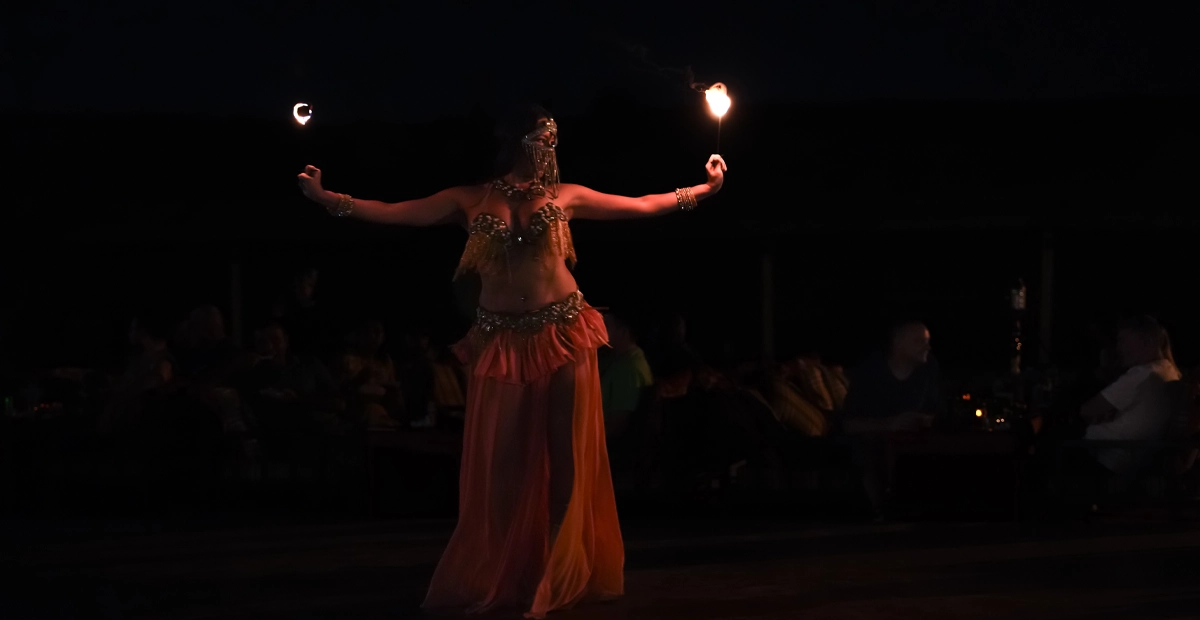
No, belly dancing is not part of traditional Emirati culture. It actually comes from Egypt and the Eastern Mediterranean region, where it developed as a folk and performance dance over time.
Many travelers see belly dance shows during a Dubai desert safari and assume it is local, but in reality, it is included mainly for entertainment. If you are a first-time visitor, we recommend starting with our essential Dubai desert safari guide for beginners to set your expectations for camp performances.
In this article, we will explain where belly dancing comes from, why it is common in desert safaris, and what authentic Emirati dances actually look like. This will help you understand the difference between real culture and tourist experiences, so you can enjoy your safari with clear expectations.
Understanding Belly Dancing and Emirati Culture
To understand this topic clearly, it is important to separate what is traditional Emirati culture and what is tourist entertainment. Many desert safari experiences include a mix of both, which can be confusing for first-time visitors.
In this section, we will break down where belly dancing fits in, why it is used in tourism, and how it differs from authentic Emirati dance traditions.
Is Belly Dancing Part of Emirati Culture?
- No, belly dancing is not originally from the UAE.
- It comes from Egypt and the Eastern Mediterranean
- It became popular through films and global tourism
- In the UAE, it is used mainly as tourist entertainment
- Most desert safari camps include it because visitors expect and enjoys it
Why Is Belly Dancing Common in Desert Safaris?
It is included mainly for entertainment and international appeal.
- Tourists often expect to see an “Arab-style” dance show
- It is easy to understand and visually engaging
- Camps use it to create a lively evening atmosphere
- It fits well with other live entertainment shows like Tanoura and fire shows
What Are Authentic Emirati Traditional Dances?
The UAE has its own traditional dances that are very different. You can discover more about the cultural side of Dubai desert safaris by looking for these authentic traditions:
- Al-Ayyala: Group dance with sticks, showing unity and heritage
- Yola: Hair movement dance performed during celebrations
- Liwa: Energetic group dance with drums
These dances are usually performed during weddings, festivals, and national events, not as solo stage shows.
Belly Dancing vs. Emirati Folk Dance: Key Differences
| Feature | Belly Dancing | Emirati Folk Dance |
| Origin | Egyptian | UAE tribal |
| Style | Solo, seductive | Group formation |
| Costume | Revealing, sequins | Traditional robes |
| Music | Modern Arabic pop | Drums, chants |
| Purpose | Entertainment | Cultural expression |
What to Expect at a Desert Safari Show
Desert safari shows are usually part of evening desert safari with BBQ dinner or overnight safari packages, not morning tours. These experiences are designed to give you a complete mix of entertainment, culture, and dining after sunset in the desert camp.
Here’s what you can typically expect:
- Live performances:
- Belly dance (tourism entertainment)
- Tanoura dance (colorful spinning performance)
- Fire show (modern, high-energy act)
- Sometimes traditional elements like Ayala dance
- Atmosphere:
- Open desert camp with seating areas
- Stage setup with music and lighting
- Relaxed evening vibe under the sky. This is a great time for photography; check our desert photography guide for tips.
- BBQ buffet dinner:
- A mix of authentic Arabic dishes and international cuisines. Review the must-try dishes at the desert BBQ!
- Grilled meats, rice, breads, salads, and desserts
- Options for both vegetarian and non-vegetarian guests
- Additional experiences:
- Camel rides
- Henna painting
- Shisha (in designated areas)
- Photo opportunities in traditional setups
Overall, the evening safari is designed as a complete cultural and entertainment experience, combining food, performances, and desert ambiance in one place. It is perfect for large groups or families seeking a family-friendly desert safari.
How to Experience Real Emirati Culture
If you want to experience authentic Emirati culture, it’s important to look beyond standard desert safari shows and explore places where traditions are practiced in a more genuine setting. While safari camps give a mix of entertainment, real cultural experiences are usually found in heritage areas, cultural centers, and local events.
Here are some better ways to experience it:
- Heritage villages and cultural centers
- National celebrations and festivals
- Traditional dance events like Ayala performances
- Museums and guided cultural experiences
- Exploring the red dunes of Lahbab with a focus on history
In simple terms, real Emirati culture is best experienced in educational and heritage-focused settings, where the goal is to share traditions, not to entertain.
What Trawey Tours Offers
Trawey Tours focuses on a balanced and transparent experience:
- Clearly explains what is cultural vs entertainment
- Offers family-friendly and comfortable shows
- Includes popular performances like belly dance without misrepresenting them as Emirati tradition
- Provides professional transfers including hotel pick-up and drop-off
- Focuses on overall desert experience, including high-quality dune bashing
- Prioritizes safety: please review who should avoid a desert safari and our advice on what to eat before a desert safari.
Belly dancing is not part of traditional Emirati culture, even though it is commonly seen in desert safari camps. It is a form of entertainment added to enhance the tourist experience. Real Emirati culture is expressed through group dances like Ayala, which reflect history, unity, and tradition.
Understanding this difference helps you enjoy your safari with the right expectations and appreciate both the entertainment and the authentic cultural elements.
Book your desert safari with Trawey Tours for a clear, comfortable, and culturally respectful experience. Book your desert safari in Dubai today!