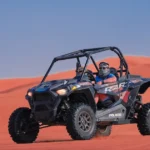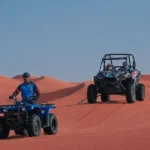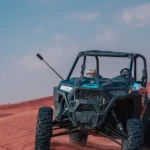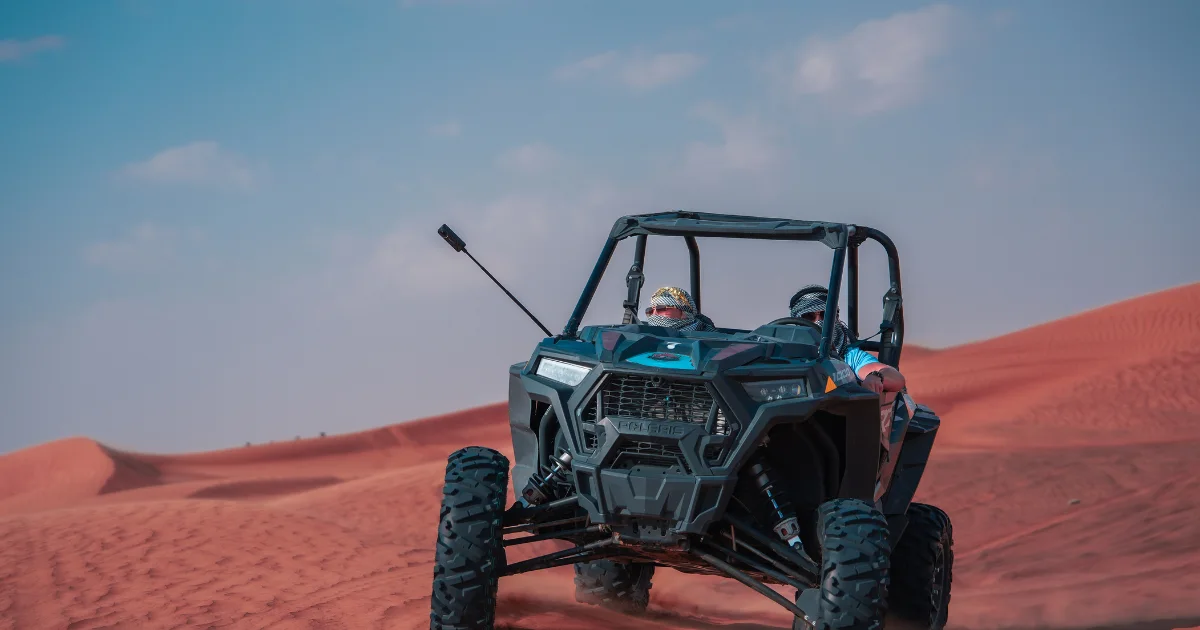
Dubai’s dune buggy tours are designed for both beginners and experienced riders. Most operators give you two ways to enjoy the experience. You can drive the buggy yourself after a safety briefing, or you can sit as a passenger while a professional guide drives. This makes dune buggy tours suitable even for visitors who have never driven off-road before.
You can also choose the buggy size based on your group. Two-seater buggies are ideal for couples or friends, while four-seater buggies are better for families and small groups who want to ride together.
Although everyone rides in the same desert, the experience is not the same for every rider. Beginners usually start with easier terrain, slower speeds, and more guidance from the instructor. Experienced riders can explore larger dunes, more technical routes, and higher-performance vehicles while still following the operator’s safety rules.
In this guide, you’ll learn how beginner and advanced dune buggy tours differ, how difficulty levels work, what kind of vehicle and terrain to expect, common booking mistakes, and how to choose the right buggy tour for your experience level.
What Is a Dune Buggy Tour?
A dune buggy tour is a guided off-road adventure where you drive a specially built buggy through Dubai’s desert. Unlike a traditional desert safari, where you travel as a passenger in a 4×4 vehicle, a buggy tour puts you behind the wheel if you choose to drive.
Every tour starts with a safety briefing. Your guide explains how to control the buggy, how to follow the convoy, and the safety rules you need to follow during the ride. Once everyone is ready, the group heads into the desert with the guide leading the route.
Most buggy tours include the following:
- A safety briefing and riding instructions
- Safety gear such as a helmet and goggles
- Guided riding through the desert
- Stops for photos and short breaks
- Self-drive or passenger options
Some tours are available as standalone buggy experiences, while others are part of a complete Dubai desert safari with activities such as camel rides, cultural shows, and dinner.
Whether you want a relaxed introduction to off-road driving or a more adventurous ride across the dunes, there is a tour suitable for your experience level.
Do Dune Buggy Tours Actually Have Difficulty Levels?
Yes. Dune buggy tours have different difficulty levels, even if they are not always advertised as beginner or advanced.
The overall difficulty depends on two main factors: the desert conditions and the type of tour you choose.
Environmental Factors
The desert is always changing. Wind, weather, and the season affect the shape and firmness of the dunes. These natural conditions influence how challenging the ride becomes.
Some of the main environmental factors include:
- The height and steepness of the dunes
- Soft or compact sand
- Wind conditions
- Visibility
- Seasonal weather changes
If the weather becomes unsafe, operators may change the route or limit access to certain parts of the desert.
Tour and Vehicle Factors
The vehicle, route, pace, and guide also affect the overall difficulty.
Most operators use two different riding environments.
Fenced Desert Areas
Fenced riding areas are usually recommended for beginners and families. These routes are more controlled, making them easier to navigate and safer for first-time riders.
The guide leads the convoy on a planned route, and everyone follows at a comfortable pace. Since the terrain is more predictable, beginners can focus on learning how the buggy handles without worrying about unexpected obstacles.
Open Desert Areas
The open desert offers a completely different experience. The dunes are larger, the terrain changes naturally, and there are no fixed tracks to follow.
These tours are generally more suitable for experienced riders who are already comfortable driving on sand. Although the guide still leads the group, the route is less predictable and requires better throttle control and confidence.
You can request an open desert ride if you want a more adventurous experience. However, approval depends on the weather and current desert conditions. If the operator believes the terrain is too risky, the route may be changed or restricted for everyone’s safety.
Engine Power Also Makes a Difference
The buggy itself also affects how the ride feels.
Beginner tours usually use smaller, easier-to-handle vehicles with engines ranging from 150cc to 500cc. These models are lighter, easier to control, and ideal for learning basic off-road driving.
Experienced riders often choose more powerful buggies with 800cc to 1000cc or larger engines. These vehicles deliver stronger acceleration and are better suited for climbing taller dunes and tackling more technical terrain.
However, a larger engine does not automatically make the ride better. The best buggy is the one that matches your skill level and allows you to drive safely and confidently.
The Beginner Dune Buggy Experience
A beginner dune buggy tour is designed for people with little or no off-road driving experience. You do not need special driving skills to join. The guide will teach you everything you need to know before the ride begins and will stay with the group throughout the tour.
The focus is on helping you become comfortable with the vehicle, learning how to drive on sand, and enjoying the desert at a safe and controlled pace. Instead of rushing into challenging dunes, the tour gradually builds your confidence as you gain more control over the buggy.
Extended Safety Briefing (15–20 Minutes)
If you are riding a dune buggy for the first time, expect a longer safety briefing before entering the desert. Most beginner briefings take around 15 to 20 minutes, giving you enough time to understand the vehicle and ask questions.
During the briefing, the guide explains:
- How to start and stop the buggy
- How to use the steering, accelerator, and brakes
- How to control the buggy on soft sand
- The route you will follow
- Hand signals and communication methods
- Convoy rules and safe following distances
- What to do if the buggy gets stuck or you need assistance
- Emergency procedures and safety regulations
The guide also checks that your helmet, goggles, and seatbelt are fitted correctly before the tour begins.
If you have any concerns or have never driven an off-road vehicle before, this is the best time to ask questions. A good guide will make sure you feel comfortable before leaving the base camp.
Tip: Never rush through the safety briefing. It helps you understand how the buggy behaves on sand and reduces the chances of making common beginner mistakes during the first few minutes of the ride.
Gradual Terrain Introduction
Your first few minutes in the desert are usually spent on flatter and more stable terrain. This gives you time to understand how the buggy accelerates, brakes, and turns on loose sand before moving onto the dunes.
Once the guide sees that everyone is comfortable, the route gradually becomes more challenging.
You can expect to:Some operators also offer red dune routes, which feature taller and steeper dunes than the standard desert areas. These routes are generally recommended only for riders with previous off-road experience.
Unlike fenced riding areas, the open desert changes constantly. Wind can reshape the dunes overnight, making every ride slightly different.
Greater Rider Independence
Experienced riders are given more freedom during the tour, but they still ride within the operator’s safety guidelines.
The guide leads the convoy from the front but usually leaves more space between vehicles than on beginner tours. This allows experienced riders to choose a comfortable pace while staying with the group.
During the ride, experienced riders can expect:
- Fewer riding instructions
- Larger gaps between vehicles
- More responsibility for controlling the buggy
- Less frequent check-ins from the guide
- Greater flexibility within the convoy
On some tours, overtaking may be allowed in designated areas if the guide considers it safe.
However, greater independence does not mean complete freedom. Riders must still follow the guide, stay on the approved route, and follow all safety instructions.
Higher Speed Range
Experienced riders generally travel at higher speeds than beginners because they are more confident controlling the buggy on challenging terrain.
- Start on flat or gently rolling sand
- Learn how the buggy responds on soft surfaces
- Practice steering and throttle control
- Progress to moderate dunes once you gain confidence
The guide always leads the convoy and chooses a pace that suits the group. There is no pressure to tackle steep dunes immediately. The goal is to build confidence step by step rather than test your limits.
High Guide Involvement
Beginner tours include a high level of support from the guide throughout the ride.
The guide stays close to the group and regularly checks that everyone is comfortable with the terrain. If someone needs extra help or wants to slow down, the guide adjusts the pace whenever possible.
During the tour, you can expect:
- Regular communication with the guide
- Frequent comfort and safety check-ins
- Live advice on steering and throttle control
- Instructions before approaching larger dunes
- Help whenever you need it
You are never expected to navigate the desert alone. The guide leads the route from start to finish, allowing you to focus on learning and enjoying the experience.
Conservative Speed Range
Beginner tours are not about driving as fast as possible. They are about learning to control the buggy safely on different types of sand.
Most beginners ride at speeds between 20 and 40 km/h, depending on the terrain and weather conditions.
The guide controls the overall pace of the convoy, while you control the throttle within safe limits. On flatter sections, you may drive slightly faster, while steeper dunes require slower and more controlled driving.
Although the speed is lower than on advanced tours, the ride is still exciting. Driving across uneven dunes, climbing sandy slopes, and descending gentle hills creates plenty of adventure without unnecessary risk.
Remember, good control is far more important than high speed. Riders who learn proper throttle control and steering techniques usually enjoy the experience much more than those who only focus on going faster.
Vehicle Selection for Beginners
The right vehicle makes learning easier. That is why beginner tours usually use smaller and more forgiving dune buggies instead of high-performance models.
These vehicles are designed to be easy to control while still providing an enjoyable off-road experience.
Typical beginner buggies include:
- Engine size: 150cc to 500cc
- Transmission: Automatic
- Steering: Light and responsive
- Chassis: Lightweight and forgiving
- Suspension: Designed for comfort and stability on moderate dunes
Some operators also offer dual-control buggies, allowing the instructor to assist if needed. This can be helpful for riders who are nervous or completely new to off-road driving.
Choosing a smaller buggy does not mean missing out on the adventure. These vehicles are more than capable of handling beginner-friendly desert routes while helping you develop the skills needed for more challenging rides in the future.
The Experienced Rider Dune Buggy Experience
Experienced dune buggy tours are designed for riders who are already comfortable driving off-road or have completed at least one beginner ride. Instead of learning the basics, these tours focus on tackling more challenging terrain, using higher-performance vehicles, and giving riders greater independence while still following the guide.
Although experienced tours offer more adventure, safety remains the top priority. Every ride is guided, and operators adjust the route based on the weather and desert conditions.
Streamlined Briefing
Experienced riders still receive a safety briefing before entering the desert, but it is shorter than a beginner briefing. Since the guide assumes you already understand the basic controls, the focus is on the day’s route and riding conditions.
Most briefings last 5 to 10 minutes.
The guide usually covers:
- The planned route
- Current desert and weather conditions
- Areas that require extra caution
- Convoy rules and communication signals
- Emergency procedures
Unless you request additional guidance, the guide does not spend time explaining basic steering, braking, or throttle control.
Even experienced riders should pay close attention to the briefing. Desert conditions change daily, and every route presents different challenges.
Technically Challenging Terrain
The biggest difference between beginner and experienced tours is the terrain.
Instead of staying on gentle dunes, experienced riders explore steeper slopes, higher dunes, and more technical routes that require better vehicle control.
Depending on the tour, you may encounter:
- Steep dune climbs
- Sharp dune descents
- Narrow dune ridges
- Loose sand that requires steady throttle control
- Tight turns between dunes
- Longer off-road sections
Typical speeds range between 40 and 80 km/h, depending on the route, weather, and vehicle.
Several factors influence your speed, including:
- The steepness of the dunes
- Sand conditions
- Visibility
- The capability of the buggy
- The guide’s assessment of the route
Even on advanced tours, speed is never unlimited. Professional operators always set safe speed limits based on the terrain.
Private tours often provide more flexibility because the guide can adjust the pace to match your experience. On shared tours, the group travels at a speed that is comfortable for everyone.
High-Performance Vehicle Options
Experienced riders often have access to larger and more powerful dune buggies designed for demanding desert terrain.
These vehicles deliver stronger acceleration, better climbing ability, and improved suspension for larger dunes.
Advanced buggy features commonly include:
- Engine size: 800cc to 1000cc or larger
- Transmission: Manual or sequential gearbox on selected models
- Suspension: Performance-tuned suspension for rough terrain
- Steering: More responsive handling
- Body style: Side-by-side (SxS) models available for riders who want to bring a passenger
Higher engine power does not automatically make the ride better. It simply allows the buggy to handle steeper dunes and more technical routes with greater efficiency. Riders still need good throttle control and proper driving techniques to use these vehicles safely.
Speed Of The Buggy – Myth vs. Reality
Many people book a dune buggy tour expecting to drive at full speed across the desert from start to finish. The reality is quite different. While dune buggies are built for off-road performance, your speed depends on the terrain, your experience, and the operator’s safety rules.
The goal of a dune buggy tour is not to drive as fast as possible. It is to enjoy the desert safely while maintaining full control of the vehicle. On many dunes, good throttle control is more important than speed.
Can You Actually Choose Your Speed?
Yes, but only within safe limits.
When you drive a dune buggy, the throttle is in your hands. You decide how much to accelerate or slow down while following the guide’s instructions.
However, this does not mean you can drive at any speed you like.
Every operator sets a maximum pace based on:
- The difficulty of the route
- The weather and visibility
- The condition of the sand
- The experience level of the group
- The capabilities of the buggy
On beginner tours, the guide keeps the convoy at a slower and more controlled pace so everyone can learn comfortably.
Experienced riders usually enjoy more flexibility, especially on private tours, but they are still expected to stay within the guide’s recommended speed range.
Shared Tours
On a shared tour, everyone follows the same convoy. The pace is set according to the group, so faster riders may need to slow down if other participants are less experienced.
Private Tours
Private tours offer more flexibility. Since the guide is focused only on your group, they can adjust the pace to match your confidence and riding ability, provided it remains safe for the terrain.
Even on private tours, unlimited speed is never allowed. The guide always has the final decision on what is safe.
Why Speed Restrictions Exist
Speed limits are not there to reduce the fun. They exist to protect both riders and the vehicles.
The Dubai desert is constantly changing. One dune may be easy to climb, while the next could have a much steeper drop on the other side. Driving too fast in these conditions can reduce your reaction time and increase the risk of losing control.
Operators also manage speed for several other reasons.
Rider Safety
Some dunes require careful throttle control rather than high speed. Driving too fast over a blind crest or steep descent can be dangerous, even for experienced riders.
Convoy Management
Most buggy tours travel in a convoy led by a guide.
If one rider drives much faster than everyone else, the convoy becomes spread out. This makes communication more difficult and can create unnecessary safety risks.
Keeping the group together allows the guide to monitor every rider and respond quickly if someone needs assistance.
Weather and Terrain Conditions
Wind, loose sand, and poor visibility can all affect how safely a buggy can be driven.
When conditions change, guides often reduce the group’s speed to maintain better control throughout the ride.
Insurance and Liability
Professional tour operators also follow insurance and safety regulations.
These requirements often include maximum operating speeds, approved riding areas, and convoy procedures that help protect both guests and staff.
5 Mistakes Beginners Make When Booking
Booking the right dune buggy tour is just as important as learning how to drive one. Many first-time riders choose a tour based on engine size or social media videos instead of their actual experience level. Avoiding these common mistakes will help you have a safer and more enjoyable ride.
1. Booking the Most Powerful Buggy
A bigger engine may look impressive, but it does not automatically make the experience better. High-performance buggies require better throttle control and handling skills.
If you are new to off-road driving, choose a buggy that matches your experience instead of the largest engine available.
2. Thinking Road Driving Experience Is Enough
Many beginners assume that driving a car prepares them for a dune buggy ride. Desert driving is completely different.
Unlike paved roads, sand constantly shifts beneath the tires. You need to learn how to maintain momentum, steer on soft sand, and control the buggy on slopes.
3. Ignoring the Safety Briefing
Some riders treat the safety briefing as a formality. In reality, it is one of the most important parts of the tour.
The guide explains throttle control, braking techniques, convoy rules, and emergency procedures. Most beginner mistakes happen during the first few minutes because riders overlook these instructions.
4. Choosing an Advanced Tour After Watching Social Media Videos
Many viral dune buggy videos show experienced riders tackling steep dunes at high speeds. These clips are edited highlights and do not reflect a typical beginner tour.
Book a tour that matches your current skill level instead of trying to recreate what you see online.
5. Joining an Advanced Shared Tour Without Checking the Group
On a shared tour, everyone rides together.
If your group includes mostly experienced riders, you may feel pressured to keep up. On the other hand, experienced riders may need to slow down for beginners.
Always ask the operator whether the tour is suitable for your experience level before booking.
4 Mistakes Experienced Riders Make When Booking
Experienced riders also make booking mistakes, especially when they assume every operator offers the same experience.
Before booking an advanced tour, ask a few questions to make sure the ride meets your expectations.
1. Assuming Every Operator Offers High-Performance Buggies
Not every company has 800cc or 1000cc+ vehicles.
Some operators mainly cater to beginners and only offer smaller engine models. Always ask about the buggy specifications before making a reservation.
2. Not Asking About the Terrain
An “advanced” tour does not always mean more technical dunes.
Some operators simply increase the pace on flatter desert routes instead of taking riders onto larger dunes.
Ask whether the tour includes steep climbs, red dunes, or technical terrain if that is the experience you are looking for.
3. Booking a Shared Tour Expecting Complete Freedom
Shared tours follow a convoy.
Even experienced riders must ride at a pace that suits the group. If individual freedom is important to you, consider booking a private tour instead.
4. Ignoring Private Tour Options
Many experienced riders avoid private tours because they cost more.
However, the additional cost often provides better value through flexible routes, personalised pacing, and more time on challenging terrain.
For riders who want the best possible desert driving experience, a private tour is often worth the upgrade.
When Are You Ready to Upgrade to an Advanced Tour?
You can upgrade your standard safari package, which has a certain duration of dune buggy tour, to increase the duration of your safari.
You may be ready to upgrade if:
- You have completed at least one beginner dune buggy tour.
- You can control the throttle smoothly without constant guidance.
- You are comfortable handling the buggy’s size and weight.
- You can confidently climb and descend moderate dunes.
- You enjoy technical driving as much as the adventure.
- You can follow the convoy without struggling to keep pace.
Frequently Asked Questions
Yes. Beginner tours are designed for first-time riders and include a full safety briefing.
No. Most beginner tours assume you have no off-road driving experience.
Yes. Most operators allow you to ride as a passenger with a professional driver.
Yes. Most companies offer both options depending on your group size.
Yes, but within safe limits. You control the throttle while following the guide’s pace.
Sometimes. It depends on vehicle availability and whether the operator believes you are ready for a more advanced ride.
If you are a beginner, a guided tour with easier terrain and a smaller buggy will help you build confidence while enjoying Dubai’s desert safely. If you already have off-road experience, an advanced or private tour can offer more technical routes, higher-performance vehicles, and greater flexibility.
Understanding these differences before you book will help you choose a tour that is both exciting and enjoyable.
At Trawey Tours, we believe every rider deserves an experience that matches their skill level. Our team helps you choose the right vehicle, route, and tour so you can explore Dubai’s desert with confidence.
Book your Dubai dune buggy tour with Trawey Tours today and enjoy a safe, professionally guided adventure tailored to your experience.