Why Dubai Desert Sunrises Are Special for Photography
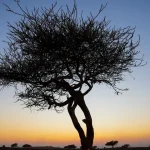
Desert sunrises are special because of the light and the silence. The sun rises slowly and the light is warm and golden. Long shadows show dune shapes and textures. The sky changes color fast, deep blue, pink, orange, then gold. There are few people early in the morning. That gives you calm, clean frames. Wildlife is more active at dawn. Falcons, camels, and birds appear in soft light.
For photographers, mornings in the desert are pure magic. The natural light is soft, the air is clear, and the landscape feels untouched, making it the best time to capture stunning shots. If you are a first-time visitor, we recommend starting with our essential Dubai desert safari guide for beginners to set your expectations for the trip.
Best Season and Weather for Sunrise Photography in Dubai
The Dubai desert changes with the seasons, and so does the sunrise experience.
- Best months: October to March. The weather is cool and skies are often clear. The winter months (November to March) offer the most comfortable weather and lighting for photography.
- Winter mornings: Cooler air, clearer light, and less heat haze.
- Summer months: Mornings can be hazy or bright. Heat can cause shimmering and lower contrast.
- Check conditions: Watch for sandstorms. If wind is strong, protect your gear and delay shooting.
- Fog and dew: Rare but possible. If fog forms, it can add mood and layers to your images.
Top Spots for Morning Photography During a Safari
Different desert locations offer unique backdrops for sunrise photos:
- Red Dunes of Lahbab – Deep orange sand and classic dune curves. Great for close-up textures and wide desert panoramas.
- Al Qudra Desert – Dunes plus small lakes and wildlife. Good for mixing landscape with animals.
- Fossil Rock Area – Rocky foregrounds and wide desert views. Ideal for contrasting dunes with stone textures.
- Trawey safari routes – Ask your guide for the best vantage points. Guides know where the light works best.
Camera Gear Recommendations for Desert Conditions
The desert sand and dust can damage your camera equipment, so it is better to take precautions beforehand.
- Use lens covers and filters to keep dust away.
- Carry a microfiber cloth to clean lenses quickly.
- A tripod helps capture steady shots in low light.
- Bring spare batteries, as the cold morning air can drain power faster.
- Wide-angle lenses work best for landscapes, while telephoto lenses capture wildlife and details.
- Accessories: Remote shutter, spare batteries, extra memory cards, small cleaning kit.
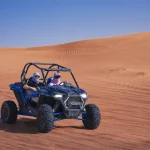
Tips for Shooting Quad Biking Action Shots
Quad biking is fast and exciting, but it’s tricky to capture the perfect moment.
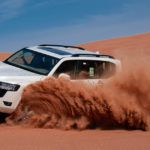
- Use a fast shutter speed (1/1000 s or faster) to freeze motion.
- Set your camera to continuous focus mode to track riders.
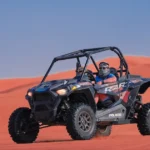
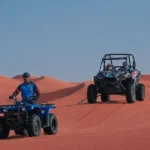
- Frame riders against the dunes with the sun rising behind them. This creates a dynamic silhouette.
- Stay at a safe distance. Always follow your guide’s instructions for safety. Review our quad biking safety tips to better anticipate the action.
How to Get the Best Light and Angles
The phases of sunrise change quickly, so it is important to do the right planning.
- Arrive early: Be on location 30–45 minutes before sunrise. Pre-dawn light is often the most beautiful.
- Golden hour: Shoot during first light and the 20–30 minutes after sunrise for warm tones.
- Silhouettes: Place subjects between you and the rising sun. Meter for the sky to get strong silhouettes.
- Low angles: Shoot low to emphasize dune texture and foreground detail.
- High angles: Climb a dune for sweeping lines and leading curves.
- Bracketing: Take multiple exposures (±1 EV) to protect highlights and get good shadow detail. Check our desert photography guide for more technical tricks.
- Use the histogram: Avoid blowing highlights while keeping shadow detail for editing.
Wildlife and Cultural Photography Opportunities
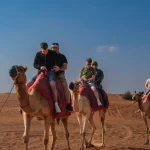
The desert is home to many wildlife animals. At early hours, you may spot camels, falcons, or even an Arabian oryx. Dubai is known for its heritage and cultural values, early hours can capture the essence of rituals of locals as well.
- Wildlife: Use 200–400 mm for distant animals. Move slowly and keep distance. Early morning light is soft and flattering.
- Falcon photos: Have a telephoto for natural shots and a mid-range lens for portraits with the handler. Always ask the handler before touching or posing.
- Bedouin setups: Capture coffee rituals, tents, and local crafts. These add storytelling to your images. You can discover more about the cultural side of Dubai desert safaris during these quiet morning hours.
- Respect: Ask permission before photographing people. Be polite and patient.
Editing Tips for Desert Photos
- White balance: Warm up slightly to keep sunrise colors rich.
- Exposure: Recover highlights and lift shadows carefully.
- Contrast and clarity: Increase a little to show sand texture. Avoid overdoing it.
- Saturation/vibrance: Boost subtly to keep color natural.
- Spot removal: Clean dust spots from the sky and sensor marks.
- Tools: Lightroom is great for bulk edits. Photoshop for advanced work. Snapseed works well for mobile edits
Yes. Most tours allow tripods. Tell your guide before the trip.
Sunrise time changes with the season. Check a local weather app and plan to arrive 30 to 45 minutes before sunrise.
Dress in layers. Mornings can be cool. Wear closed shoes for walking on dunes.
Yes. Morning safaris are often calm and suitable for families and elders. See our advice for a family-friendly desert safari.
For regular photography you do not need a permit. Drone filming usually needs permits and approvals. Check for the government rules.
Gallery of Top Guest Photos Shared with Trawey

“Share your sunrise photos with us for a chance to be featured.”
Desert sunrises offer unique light, calm, and great subjects. They give clear colors, long shadows, and quiet scenes that work for both wide landscapes and intimate portraits. If you love photography, a sunrise desert safari or a morning desert safari will give you shots you will keep for life.
If you want a more personalized experience to get the perfect shot, consider a private desert safari. Remember to stay hydrated during your shoot; review our advice on how much water to drink during a 6-hour safari. If you feel unwell at any time, remember you can always ask the driver to stop.
Book your morning desert adventure with Trawey. Our guides know the best spots and the best angles. Book your desert safari in Dubai now. Let us help you capture unforgettable desert sunrise moments.