The culture and tradition of Emirati society evolved from a traditional Bedouin lifestyle to a globalized modern society in a remarkably short span of time — built on the foundation of strong Islamic beliefs and centuries of desert wisdom.
In just a few decades, a society rooted in desert life, pearl diving, and tribal traditions has grown into a global center for business, tourism, and innovation. Cities like Dubai and Abu Dhabi now represent modern development, but the country’s cultural roots remain strong and deeply visible in daily life.
The journey of Emirati culture can be divided into two defining phases: pre-oil traditions and the discovery of oil in the late 1950s and 1960s, followed by the formation of the UAE in 1971 and its rise as a global nation.
In this article, we discuss traditional Emirati life before modernization, how oil discovery changed society, cultural shifts in the modern era, efforts to preserve heritage, and the challenges and future of Emirati culture.
Traditional Emirati Culture Before Modernization
Before modernization, Emirati culture was shaped entirely by the natural environment and limited resources. People lived simple lives, closely connected to the desert and the sea. Survival required cooperation, strong social bonds, and practical knowledge passed down through generations.
Life was not easy, but it created a culture built on values like resilience, hospitality, and community support — values that visitors still encounter today during authentic Emirati camp experiences.
Bedouin Lifestyle
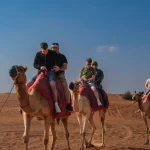
The Bedouin lifestyle was centered around movement and adaptation to harsh desert conditions. Families moved across the desert following water sources and grazing land.
Key features of Bedouin life:
- Nomadic lifestyle driven by seasonal movement
- Dependence on camels and goats for food, transport, and trade
- Use of tents and temporary shelters while traveling across the desert
Cultural values that emerged:
- Strong family and tribal connections
- Hospitality towards guests — a value that remains central to Emirati identity today
- Oral traditions including poetry, music, and storytelling
This hospitality tradition is still alive in the desert today. The welcome ritual of Arabic coffee and dates offered at every desert camp is a direct continuation of this Bedouin practice — a gesture of generosity that has survived centuries of change.
Pearl Diving and Coastal Communities
Pearl diving was the primary source of income before oil wealth, providing stable livelihoods for coastal communities across the region. Pearling also deeply influenced music, traditions, and social life — particularly through sea songs and the shared experiences of diving seasons.
The spirit of that underwater heritage continues in modern form at Yas Waterworld in Abu Dhabi, where visitors can experience pearl diving firsthand — diving to search for oysters and even crafting their own jewelry from the pearls they find.
Religion and Social Values
Islam played a vital role in shaping Emirati culture, influencing not only religious practices but also social behavior, laws, and daily routines.
Key components of Islamic-inspired Emirati culture:
- Respect for elders and family hierarchy
- Strong community values and collective responsibility
- Defined social roles within families
- A shared prayer routine observed across the nation
These values continue to shape Emirati society today and are visible in the etiquette and atmosphere of every cultural landmark, from the Sheikh Zayed Grand Mosque to traditional desert camps.
Impact of Oil Discovery on Emirati Society
Oil discovery was a major turning point in the history of the UAE. It transformed the economy, improved living conditions, and opened a door to possibilities that previous generations could not have imagined. This shift happened within a few decades, making it one of the fastest societal transformations in modern history.
1. Economic Transformation
Oil exports began in Abu Dhabi in the early 1960s and later in Dubai around 1969. The revenue allowed the government to invest heavily in national development.
Major improvements included:
- Modern housing and infrastructure across the emirates
- Access to electricity and clean water for all communities
- Rapid development of healthcare and education systems
The economy also began diversifying into sectors like tourism, aviation, and trade — laying the foundation for the UAE’s current identity as a global hub.
2. Changing Social Structures
As living standards improved, social expectations also evolved. Education became increasingly important, creating new career paths and changing how families and communities organized themselves.
Key social developments:
- Expanded access to higher education for all citizens
- A greater role for women in society and the workforce
- A shift from traditional roles to more diverse professional opportunities
These changes helped shape a more modern and inclusive society without abandoning the core values that define Emirati identity.
Cultural Changes in the Modern Era
Modern Emirati culture is shaped by globalization, technology, and one of the most diverse resident populations in the world. While traditional values remain important, daily life today looks very different from even a generation ago.
1. Education and Global Influence
Education has been a central driver of modern Emirati identity. Students now have access to both local and international learning opportunities.
Key developments:
- Free education for all Emirati citizens
- Government scholarships for studying abroad
- International universities established within the UAE
This has introduced global perspectives and new ideas while the government works actively to ensure cultural roots are not lost in the process.
2. A Diverse, Expatriate-Majority Society
The UAE is home to people from countries across Asia, Europe, Africa, and beyond — creating one of the most multicultural environments anywhere in the world.
- Multilingual workplaces and communities are the norm
- Exposure to different cultures and traditions enriches daily life
- Government policy places strong emphasis on preserving national Emirati identity within this diverse setting
This diversity is one of the things that makes the UAE uniquely fascinating for visitors. Understanding it adds depth to any travel experience — whether you’re exploring a heritage village in Abu Dhabi or participating in cultural activities at a desert safari camp.
Preservation of Emirati Heritage
Even with rapid modernization, the UAE has taken strong, deliberate steps to protect its cultural identity. Heritage is seen as a cornerstone of national pride and a foundation for future development.
1. Cultural Festivals, Museums, and Heritage Sites
Cultural events and institutions help residents and visitors connect with traditional Emirati life and history.
Examples include:
- National Day celebrations that honor the founding of the UAE
- Heritage festivals and open-air villages recreating pre-oil life
- Museums showcasing Emirati history, art, and traditional crafts
These spaces allow both residents and visitors to understand the country’s roots — the same roots that give meaning to experiences like the cultural and heritage highlights of an Abu Dhabi city tour.
2. Traditional Dress, Language, and Daily Symbols
Traditional clothing and language continue to be widely used and respected in daily life across the UAE.
Common cultural symbols:
- The kandura for men — the white robe worn daily by Emirati men
- The abaya for women and the ghutra headscarf, which visitors can experience wearing during a desert safari
- The continued importance of Arabic as the national language
These symbols reflect a living cultural identity, not a preserved museum piece.
3.Government Cultural Initiatives and Youth Councils
The UAE government actively supports cultural preservation through dedicated policies and programs, with particular focus on engaging younger generations.
Key initiatives include:
- Funding for arts and cultural projects across the emirates
- Support for traditional crafts including weaving, pottery, and metalwork
- Youth councils promoting cultural awareness and heritage education
These efforts ensure that knowledge, traditions, and values are passed meaningfully from one generation to the next.
Emirati culture has evolved from a simple, survival-based lifestyle to a modern and globally connected society. This transformation was driven by oil discovery, economic growth, and globalization — but it has never meant abandoning the past. Today, Emirati culture is a genuine blend of old and new, where heritage and modern life exist side by side.
Understanding this cultural journey makes any visit to the UAE more meaningful. It allows travelers to see beyond the modern skyline and connect with the country’s true identity — one shaped by centuries of desert life, community values, and extraordinary resilience.
Planning your UAE trip?
Explore the culture, history, and traditions with Trawey Tours. Get in touch with us to plan a travel experience that goes beyond the surface and connects you with the real UAE.