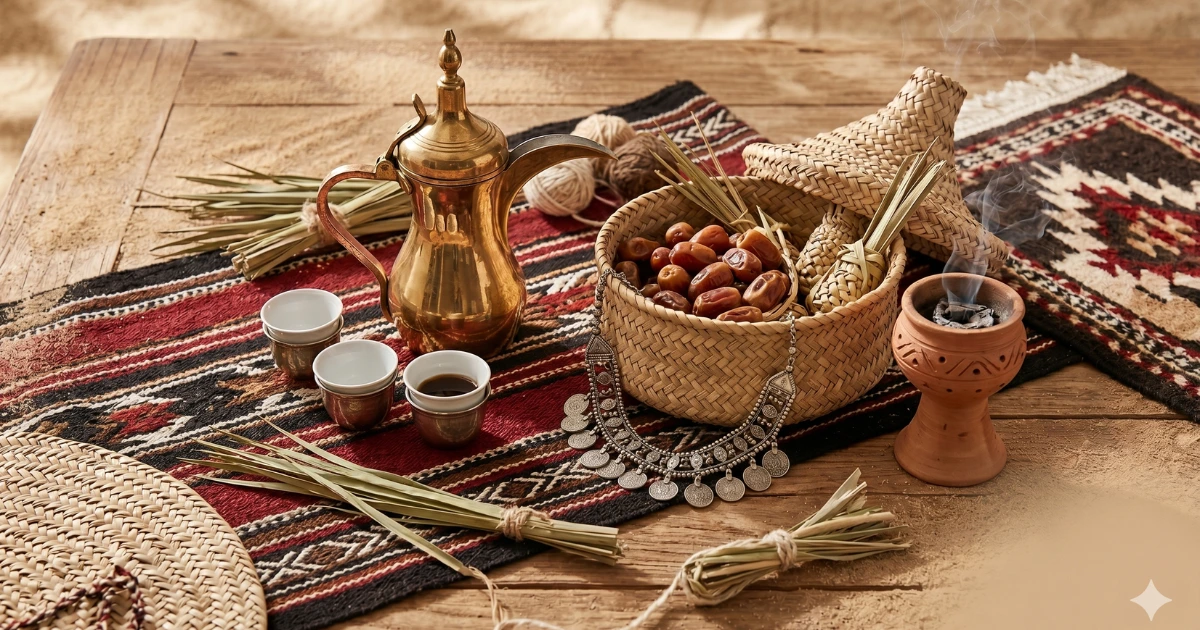
The United Arab Emirates is widely known for its modern cities and luxury shopping malls, but it also has a rich tradition of handmade crafts that reflect its history and culture. These handicrafts come from a time when people relied on natural materials and handmade tools in their daily lives.
Today, these crafts are still made by local artisans and represent living traditions. Exploring them allows visitors to understand Emirati culture more deeply while supporting the people who continue these skills as a primary source of livelihood. You encounter this same craft heritage firsthand during authentic Emirati desert camp experiences — where weaving, pottery, and traditional tools are visible parts of the environment.
In this article, we discuss the importance of handicrafts in Emirati culture, popular traditional crafts and what they mean, common souvenirs tourists can buy, where to find authentic handmade items, and tips to identify real handicrafts.
The Role of Handicrafts in Emirati Culture
Handicrafts in the UAE began as practical solutions for everyday life. People used available materials like palm leaves, wool, clay, and metal to create tools, household items, and equipment for survival in desert and coastal environments. Over time, these items became more than functional — they began to carry cultural meaning and artistic value.
How handicrafts shaped daily life:
- Used for shelter, storage, and cooking across desert communities
- Made from natural and locally available materials
- Designed for durability in harsh climates and long desert journeys
Cultural importance:
- Skills passed down through generations within families
- Strong involvement of women in craft-making traditions
- Supported today by cultural programs and heritage organizations
This practical creativity is part of the same Bedouin ingenuity that visitors discover during the cultural side of a desert safari experience — where every detail of camp life reflects centuries of desert adaptation.
Popular Emirati Handicrafts
Traditional Emirati crafts are closely connected to the desert environment and the Bedouin lifestyle. Each craft was developed using locally available materials to serve real everyday needs — built to withstand harsh conditions just as the people who made them did.
1. Al-Sadu Weaving
Al-Sadu is a traditional Bedouin weaving technique practiced mainly by women, using wool from sheep, camels, and goats to create strong and decorative textiles.
Common products:
- Rugs, carpets, and wall hangings
- Cushions and majlis decorations
- Saddle bags for desert travel
Key features:
- Bold geometric patterns in red, black, white, and brown
- Durable and functional designs built for desert conditions
Al-Sadu is recognized as an important cultural tradition and is listed on UNESCO’s Intangible Cultural Heritage register. You will often see Al-Sadu-inspired textiles in the seating areas of desert safari camps, where the patterns connect the modern experience to an ancient craft tradition.
2. Palm Leaf Weaving (Al Khoos / Safeefah)
Palm leaf weaving uses dried palm fronds to create useful and decorative items — a perfect example of how every part of the date palm tree was utilized in traditional life.
Items made:
- Baskets, storage boxes, and mats
- Fans, bags, and decorative pieces
Why it is important:
- Eco-friendly and deeply sustainable by nature
- Still actively practiced in Fujairah, Ras Al Khaimah, and other northern emirates
- Reflects the same respect for natural resources that defines responsible desert tourism
3. Pottery and Clay Crafts
Pottery was widely used for storing water, cooling food, and cooking in the desert past. Clay items were shaped by hand and designed specifically to suit the desert environment.
Modern uses include decorative vases, incense burners, and traditional kitchenware — all still reflecting the classic shapes and styles of their desert origins.
4. Metalwork and Dallah Coffee Sets
Metalwork includes beautifully crafted items made from brass, copper, and silver. The most important of these is the dallah — the traditional Arabic coffee pot that has become one of the UAE’s most recognized cultural symbols.
Common items:
- Dallah coffee pots and serving trays
- Lanterns and decorative incense burners
The dallah is inseparable from the tradition of Arabic coffee (gahwa) as a welcome gesture — one of the most meaningful rituals in Emirati hospitality. Owning one as a souvenir carries that cultural meaning home with you.
5. Traditional Jewelry
Traditional Emirati jewelry is inspired by Bedouin and coastal styles. These pieces are bold, detailed, and often deeply symbolic.
Types of jewelry:
- Necklaces, bangles, and anklets
- Headpieces and coin-based designs
Features:
- Made from silver or gold with geometric and cultural patterns
- Often connected to protection, fertility, and cultural identity
Much like the henna tradition practiced at desert camps, traditional Emirati jewelry carries meanings that go far deeper than decoration — each pattern and motif tells a story.
Popular Souvenirs Tourists Buy in the UAE
Many souvenirs in the UAE are inspired by traditional crafts, but not all are genuinely handmade. Choosing authentic items supports local artisans and directly contributes to the preservation of these traditions.
Popular authentic souvenirs to look for:
- Al-Sadu cushions, rugs, or wall pieces
- Palm-leaf baskets, mats, and woven bags
- Traditional coffee sets and dallah pots
- Handmade pottery and decorative clay items
- Camel-themed crafts made from natural materials
- Traditional perfumes like Oud and Bakhoor with handcrafted burners
Where to Find Authentic Emirati Handicrafts
Finding real handicrafts requires visiting the right places — where local artisans and cultural organizations are directly involved in production and sale.
1. Traditional Souks
Old markets offer a far more authentic shopping experience than modern malls. Look for stalls displaying handmade items or where artisans are visibly at work.
Where to look:
- Ras Al Khaimah Old Souk
- Traditional souks in Dubai and Sharjah
2. Heritage Villages and Cultural Centers
These locations allow visitors to watch how crafts are made and buy directly from the artisans producing them.
Key example:
- Abu Dhabi Heritage Village — offering live craft demonstrations, traditional workshops, and authentic handmade products
This type of hands-on cultural experience is also part of the full-day Abu Dhabi city tour, which takes visitors through heritage sites and gives them time to engage with living Emirati traditions.
3. Museums and Cultural Shops
Museum gift shops often sell carefully selected items made by verified local artisans — offering better quality, confirmed authenticity, and the knowledge that your purchase directly supports cultural preservation.
Supporting Local Artisans and Cultural Preservation
Buying traditional handicrafts helps keep these skills alive across generations. Many artisans — especially women in smaller emirates — depend on these crafts as a primary source of income.
Why it matters:
- Supports local communities and family livelihoods
- Encourages younger generations to learn and continue traditional skills
- Directly contributes to preserving cultural heritage in a fast-changing country
Each purchase is a small but meaningful act of cultural support.
Tips for Buying Authentic Handicrafts
Not all souvenirs are handmade, so knowing how to identify genuine items makes a real difference.
What to look for:
- Slight natural irregularities that show real handwork
- Natural materials such as wool, palm leaves, or clay
- Visible weaving, hand-stitching, or crafting details up close
What to ask the seller:
- Where was it made?
- Is it handmade or factory-produced?
- Does this purchase support local artisans directly?
Authentic items may cost more, but they are more meaningful, more durable, and represent a genuine connection to the culture you are visiting.
Emirati handicrafts offer a deep connection to the past — from desert life and palm farming to coastal traditions. These items represent stories, skills, and cultural identity that cannot be replicated by any factory.
By choosing authentic handicrafts, travelers experience a different side of the UAE and take home something genuinely meaningful while supporting the communities that keep these traditions alive.
Exploring traditional crafts adds real value to any trip — helping travelers connect with the culture and understand the history behind the country’s remarkable growth.
Looking for authentic experiences in the UAE?
Plan your journey with Trawey Tours to explore heritage sites, encounter local artisans, and discover traditions that go far beyond shopping malls.