The main reasons are long hours of use, extreme desert temperatures, constant photo and video recording, GPS navigation, and the way heat affects battery chemistry. Many travelers only realize the problem after their phone dies during sunset, their camera shuts down before a performance starts, or they lose access to maps and emergency contacts.
If you are planning a desert safari, camping trip, Photography Tour, or any outdoor desert adventure, carrying extra batteries is one of the smartest things you can do. Desert environments can drain batteries much faster than many travelers expect. A phone that normally lasts all day may suddenly lose power within a few hours, while camera batteries, drones, and power banks may perform far below their usual capacity.
In this article, we will discuss:
- Why Batteries Drain Faster In Desert Heat
- Real Travel Situations Where Battery Drain Becomes A Problem
- Why You Should Carry Extra Batteries
- Practical Tips To Reduce Battery Drain
- The Best Battery Backup Options For Travelers
- Frequently Asked Questions About Desert Battery Usage
Why Do Batteries Drain Faster in the Desert?
Batteries usually drain faster in hot desert environments because heat affects the chemical reactions happening inside the battery.
Most modern devices use lithium-ion batteries. These batteries generate electricity through controlled chemical reactions. Under normal temperatures, these reactions happen at a stable rate. However, when temperatures rise significantly, the reactions speed up.
Heat makes the battery work harder even when you are not actively using the device.
Faster Battery Discharge
One of the biggest effects of heat is faster battery discharge.
Even if your phone is sitting in your pocket or camera bag, the battery may lose charge more quickly than it would in cooler conditions. This happens because heat increases internal energy inside the battery cells.
As a result:
- Batteries Drain Faster During Use
- Batteries Lose Power Faster While Idle
- Battery Percentage Drops More Quickly
Internal Heat and Automatic Shutdown
Modern smartphones, cameras, drones, and tablets have built-in protection systems.
When the battery temperature becomes too high, the device may:
- Reduce Performance
- Dim The Screen
- Disable Certain Features
- Shut Down Completely
This automatic shutdown is designed to prevent permanent damage to the battery and internal electronics.
Many travelers mistake this for a device malfunction when it is actually a safety feature.
Permanent Battery Capacity Damage
Occasional exposure to heat is usually manageable, but repeated exposure to extreme temperatures can permanently damage a battery.
Over time, excessive heat can:
- Reduce Overall Battery Capacity
- Shorten Battery Lifespan
- Increase Charging Problems
- Cause Faster Future Drain
This means a battery that once lasted 10 hours may only last 7 or 8 hours after repeated overheating.
Real Travel Situations Where Battery Drain Becomes a Problem
Battery drain often becomes a problem when travelers least expect it. Most people do not notice the issue until they are already in the desert and heavily relying on their devices.
Capturing Photos and Videos
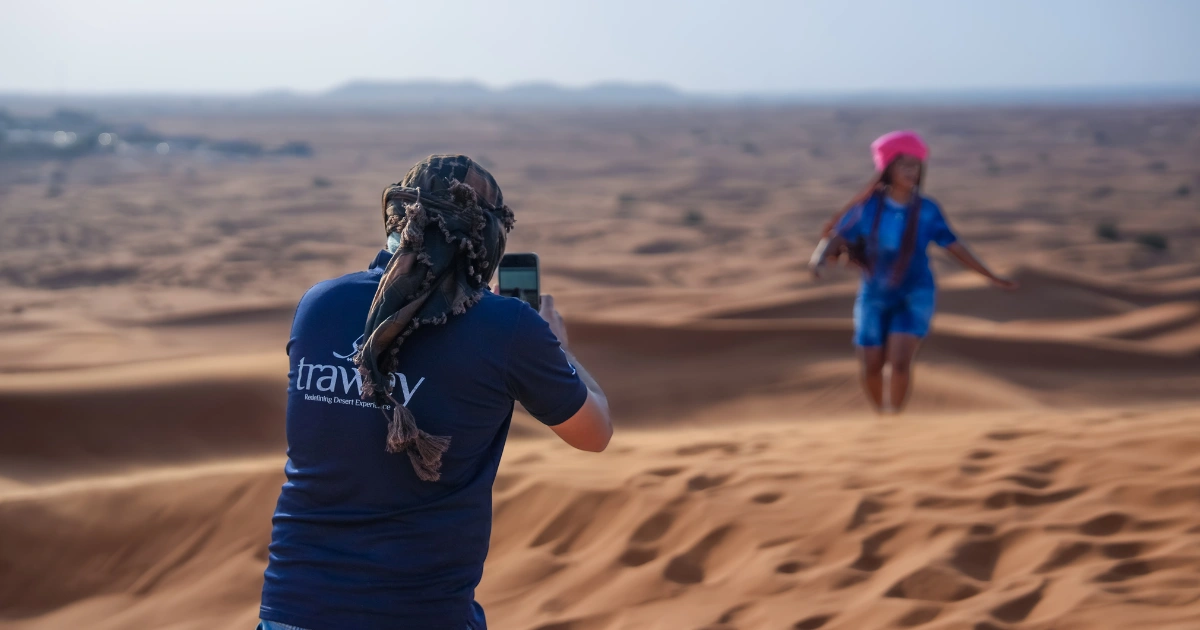
Many travelers spend the entire safari taking photos and videos.
Activities such as:
- Dune Bashing
- Camel Riding
- Falcon Photography
- Sunset Photography
- Cultural Performances
can quickly drain phone and camera batteries.
GPS and Navigation
Some travelers use navigation apps before pickup or while driving to desert meeting points.
GPS services continuously consume battery power and become even more demanding in hot conditions.
Emergency Communication
A drained phone can become a serious problem if travelers need:
- Emergency Assistance
- Driver Contact Information
- Booking Confirmations
- Digital Tickets
- Family Communication
Why Should You Carry Extra Batteries?
Yes, carrying extra batteries or backup power sources is highly recommended for desert travel.
Desert conditions create the perfect combination for rapid battery drain:
- Heat
- Long Activity Hours
- Constant Device Usage
- Limited Charging Access
Depending on your activities, consider carrying:
| Item | Purpose |
|---|---|
| Spare camera battery | Extra photography time |
| Power bank | Phone charging |
| Spare charging cables | Suitable for other charging portals at the camps |
| Charging portals for cars | Charging during your journey |
| Charging cable | Backup connectivity |
| Portable power station | Extended camping use |
Having backup power ensures you do not miss important moments simply because your device runs out of battery. This is especially important during a Private Desert Safari where photography and personal documentation are a major part of the experience.
Practical Tips to Reduce Battery Drain in the Desert
A few simple precautions can significantly improve battery performance during your trip.
Keep Devices Out of Direct Sunlight
Avoid leaving phones, cameras, or power banks:
- On Vehicle Dashboards
- On Desert Sand
- Under Direct Sunlight
Heat builds up very quickly in these environments.
Use Airplane Mode When Possible
If you do not need calls or internet access, airplane mode can reduce unnecessary battery consumption.
Lower Screen Brightness
The screen is one of the largest battery consumers on most devices. Reducing brightness can noticeably extend battery life.
Close Unused Apps
Background apps continue consuming power even when not actively used.
Carry Devices in a Shaded Bag
Keeping electronics inside an insulated or shaded bag can help prevent overheating.
Charge Before Leaving
Always begin your desert trip with fully charged devices. Many battery-related problems start because travelers assume they can charge later. For a complete list of what to prepare before your safari, see our Essential Health and Safety Tips for Your Dubai Desert Safari.
Best Battery Backup Options for Desert Travelers
| Option | Best For | Advantages |
|---|---|---|
| High-capacity power bank | Phones and tablets | Easy to carry and reliable |
| Spare camera batteries | Photography enthusiasts | Quick battery swaps |
| Vehicle charger | Long road trips | Convenient during transfers |
| Portable power station | Camping station | Multiple device charging |
| Solar charger | Multi-day desert trips | Useful in remote areas |
Travelers planning a Quad Bike and Buggy Tour or extended adventure activities should especially consider high-capacity power banks, as these activities combine physical exertion, photography, and long hours away from charging access.
Frequently Asked Questions
Yes. High temperatures increase battery discharge and reduce efficiency.
Yes. Prolonged exposure to extreme heat can reduce battery lifespan and overall capacity.
Yes. A power bank is one of the easiest ways to avoid running out of power during the trip.
Yes. Most modern phones automatically shut down when temperatures become unsafe.
Yes. Camera batteries can lose charge faster and may not perform at their normal capacity.
Desert environments can be challenging for batteries because of extreme heat, long activity hours, and continuous device usage. Understanding why batteries drain faster helps travelers prepare properly and avoid unexpected disruptions during their trip.
A simple backup plan can make a significant difference. Carrying spare batteries, power banks, charging cables, and keeping devices protected from direct sunlight can help ensure your phone, camera, or drone remains operational throughout the experience.
At Trawey, we understand how important devices are during a Desert Safari in Dubai. Travelers rely on them for photography, navigation, communication, and capturing once-in-a-lifetime moments. That is why our safari teams provide practical guidance before every trip and allow guests to keep essential charging accessories safely during transfers. We encourage travelers to arrive with fully charged devices and backup power options so they can enjoy the desert without worrying about losing battery at the wrong moment.
If you are planning a Desert Safari in Dubai, preparing for battery drain is a small step that can make a big difference in your overall experience.