The Dubai desert is the heart of Emirati culture and Bedouin traditions.
In this blog, we explore traditional Emirati activities that guests can experience during a desert safari. We also discuss how these activities reflect the daily life, values, and history of the Bedouin people.
Travelers gain a deeper understanding of desert life through cultural experiences. These include camel riding, falconry, Arabic hospitality, and traditional arts.
This article explains these activities and how guests can join in. Participating makes the desert safari experience more meaningful and culturally enriching. For a complete overview of everything included across all safari types, read our complete Dubai desert safari guide — everything you need to know before you go.
Why Traditional Activities Matter in Emirati Culture
Traditional Emirati activities keep history alive. They also allow the local community to share their heritage with the world.
For generations, these activities were part of daily life for Bedouin people. They helped families and communities bond, celebrate, and support one another. Elders passed down many traditions, such as music, storytelling, and crafts, to younger generations.
In modern desert safaris, these activities preserve Emirati heritage respectfully. Guests do not just read about history — they experience it. Sitting in a traditional camp, drinking Arabic coffee (Gahwa), or watching folk performances are authentic moments that create real cultural connection.
Travelers from all over the world can learn how Bedouins lived, traveled, and survived. Simple moments create a real cultural connection. For instance, sitting in a traditional camp, drinking Arabic coffee, or watching folk performances are authentic experiences.
Consequently, a desert safari becomes more than just an adventure. It transforms into a meaningful cultural journey. By including these traditions, safaris keep the culture alive while allowing guests to connect with the UAE’s roots.To understand how the desert landscape itself shaped Bedouin culture over millions of years, read our guide to the geology of the dunes — why Dubai’s sand is red and what lies beneath.
Camel Riding — The Original Desert Journey
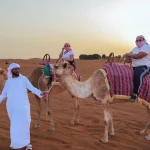
Camel riding is one of the most significant traditional activities in Emirati culture. Before modern vehicles existed, camels were the primary way Bedouin people traveled across the desert.
Camels played a key role for several reasons:
- They could survive extreme heat with very little water.
- They carried people, food, and supplies for days.
- They connected distant desert settlements.
For guests, camel riding offers a calm and peaceful way to see the desert. It provides a slow journey across the sand, mirroring how Bedouin travelers moved in the past. Guides ensure safety and explain why camels are respected in Emirati culture.
Riding a camel helps guests understand:
- How Bedouin people traveled for trade and survival.
- Why people call camels the “ships of the desert.”
- How patience and endurance shaped life in the desert.
Falconry Displays — The Aristocratic Desert Sport
Falconry holds a special place in Emirati history. For Bedouin communities, falcons were more than just birds. They were trusted partners that helped with hunting and survival.
Over time, falconry became a symbol of strength, patience, and respect for nature. Today, the UAE views falcons as a sign of pride. You will often see them in art, currency, and national symbols.
During a desert safari, guests can watch live falconry displays. They learn how trainers handle these magnificent birds. Guides explain how falcons hunt and why families treat them with such care.
Often, guests can hold a falcon under expert supervision and take photos. This experience highlights the close bond between the Bedouin people and desert wildlife.
Traditional Emirati Performances
Music and dance have always played a vital role in Emirati culture. In the past, these performances helped communities relax and celebrate after long days of work.
Tanoura Dance
The Tanoura dance represents harmony and balance. A dancer spins continuously in colourful skirts, creating a calm yet mesmerising visual effect. This Sufi-inspired performance carries deep spiritual meaning — read the full story in our guide to the spiritual history of the Tanoura performance.
Belly Dance and Fire Shows
Fire shows are a dramatic highlight of the desert camp evening. To understand the traditions behind the performance, read our guide on what is dragon spit — the story behind fire shows at desert safari entertainment.
How Guests Can Engage
Guests can clap along with the music, take photos or videos, and at some camps even learn simple steps. These performances create some of the most shareable desert safari content — read our tips for capturing viral TikTok and Instagram Reels during a desert safari.
Henna Painting — Traditional Body Art
Henna painting is a traditional art form. Artists use natural dye from henna leaves to create intricate designs. Emirati women commonly use henna during celebrations.
In Emirati culture, henna symbolizes joy, beauty, and good fortune. Women apply it during weddings, festivals, and family gatherings. It is also a social activity where women sit, talk, and share stories.
During a desert safari, guests can try simple henna designs on their hands — a quick, safe, and beautifully personal experience. To understand the deeper meaning behind each design, read our guide to henna art at the camp — more than just a souvenir, the meanings and traditions.
Live Bread and Coffee Making — True Hospitality
Hospitality is a core value in Emirati culture. Serving coffee and bread is a symbol of respect and welcome.
During evening safaris, guests can watch live bread-making and Arabic coffee preparation. They learn how to serve coffee and what it represents. Additionally, they see how locals bake traditional bread over an open fire.
This experience reflects how Bedouin families welcomed travelers into their homes for centuries.
The Bedouin Campsite Experience
The desert camp reflects how Bedouins lived in the past. It offers a place to slow down and enjoy the atmosphere.
- Camps are inspired by traditional Bedouin tents.
- Low seating, cushions, and lanterns create a calm mood.
- Guests can relax after adventure activities like dune bashing and sandboarding
- Storytelling and soft music add to the cultural feel.
Frequently Asked Questions
Yes, they are based on real Emirati and Bedouin traditions that have been practiced for generations, now adapted for guests to experience.
Yes, they are based on real Emirati and Bedouin traditions that have been practiced for generations, now adapted for guests to experience.
Most activities like camel rides, henna painting, and cultural performances, are suitable for all ages. Some may have mild restrictions for safety.
Yes, falcon displays are handled by trained professionals, and guests interact only under guidance.
Most evening desert safaris include cultural performances, except during special occasions like Ramadan or official dry days.
Traditional Emirati activities in the desert are more than just entertainment. They allow you to understand how Bedouin people lived, traveled, and celebrated.
From camel rides to henna art, each experience connects you to the roots of Emirati culture.
Book your desert safari with Trawey Tours today and explore the desert the Emirati way.