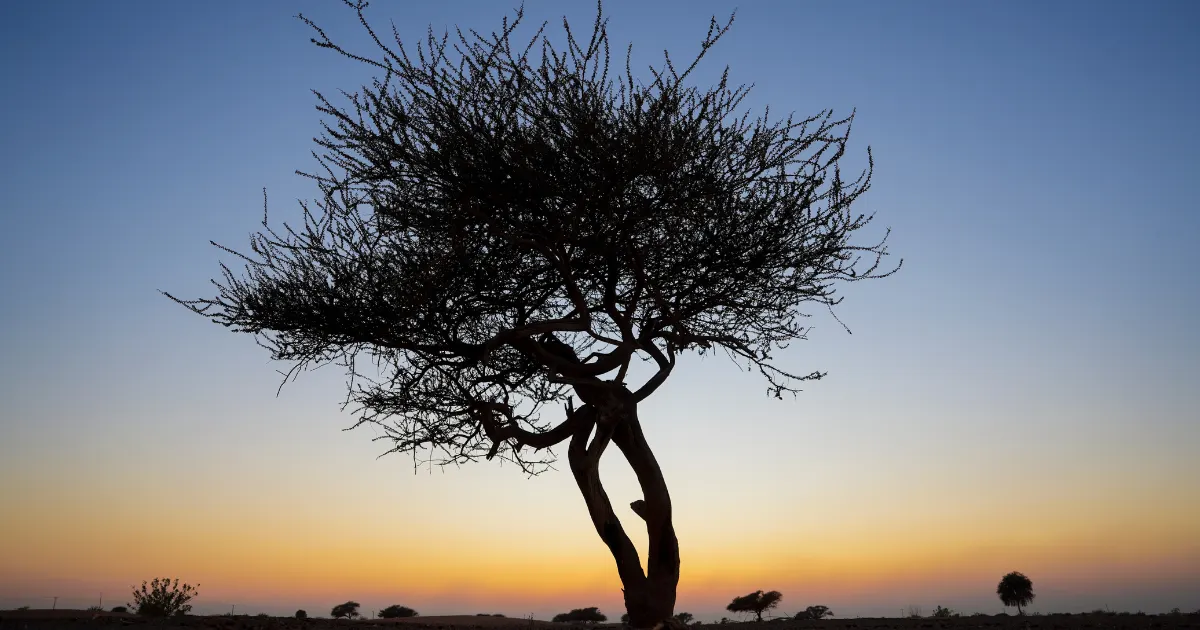
The Ghaf tree is the national tree of the UAE because it stands for resilience, peace, and life in the desert. It has survived for centuries in harsh desert conditions, providing shade, food, and shelter to people, animals, and birds.
This tree perfectly reflects the UAE’s spirit: strong, adaptable, and deeply rooted in its land and traditions.
In this article, we’ll explore what makes the Ghaf tree special, its role in desert survival, its economic and cultural importance, and how the UAE is working to protect and sustain this remarkable symbol of life in the desert.
What is the Ghaf tree?
The Ghaf tree (scientific name: Prosopis cineraria) is a strong and evergreen tree that can survive even in the toughest desert conditions. It is known for its deep roots, which help it find water far below the sand, and its green leaves, which stay fresh all year round, even when the desert is dry and hot.
You can find Ghaf trees growing naturally across the UAE, Oman, Saudi Arabia, and other parts of the Arabian Peninsula. In the UAE, it is often seen in Al Ain, Abu Dhabi, and the desert regions of Dubai.
Features of the Ghaf Tree
- Evergreen – stays green throughout the year
- Deep roots – reach up to 30 meters underground to find water
- Drought-resistant – survives long dry periods without rain
- Provides shade and shelter for animals and travelers
- Improves soil quality and prevents desert erosion
The Ghaf is considered the national tree of the UAE because it symbolizes patience, survival, and peace, qualities that reflect the Emirati spirit.
It thrives with very little water, lots of sunlight, and sandy soil, making it a true survivor of the desert.
The Ghaf Tree in Desert Survival
For centuries, the Ghaf tree has been a symbol of life and survival in the desert. For the Bedouin people, who once lived and traveled across the sands, the Ghaf was more like a lifeline.
In the harsh desert environment, where water and shade are rare, the Ghaf provided cool shelter from the burning sun. Many Bedouin families and travelers would rest under its wide branches, using it as a natural gathering spot and even a meeting place for community discussions.
Its presence often marked safe areas and served as a guide for navigation during long desert journeys.
The Ghaf also played a key role in supporting desert life. Its pods and leaves served as food for camels, goats, and other wildlife, helping animals survive when vegetation was scarce.
The tree’s deep roots also helped keep the desert soil stable and supported underground water levels, making it an important part of the region’s fragile ecosystem.
In many ways, the Ghaf tree represents the resilience and endurance of the desert people, standing strong through heat, wind, and drought.
The Ghaf as the National Tree of the UAE
The Ghaf tree was officially declared the national tree of the UAE in 2008, a decision that came from the country’s deep respect for its natural and cultural roots.
For generations, the Ghaf has stood quietly across the desert, providing shade, shelter, and life in one of the harshest climates on earth.
The tree became a symbol of peace, tolerance, and stability, values that reflect the spirit of the UAE and its people.
In 2019, during the “Year of Tolerance,” the Ghaf tree gained even greater recognition. It was chosen as the official logo of the campaign, representing how deeply the values of unity, coexistence, and respect for all are rooted in Emirati culture.
Today, the Ghaf stands as a living emblem of the UAE’s identity, strong, welcoming, and enduring through every challenge.
The Ecological Importance of the Ghaf Tree
The Ghaf tree is one of the strongest defenders of the desert ecosystem. It protects the land, supports wildlife, and plays a key role in sustainability.
Here’s how the Ghaf tree helps the environment:
- Prevents desertification: Its deep roots hold the sand and stop soil erosion caused by strong desert winds.
- Improves soil quality: The roots add nutrients to the soil, helping nearby plants grow.
- Supports desert wildlife:
- Birds nest in its branches.
- Camels, goats, and other animals eat its pods and leaves.
- Insects and small mammals use it for food and shade.
- Birds nest in its branches.
- Provides natural shade: Its wide canopy offers a cool resting spot in extreme heat.
- Stores carbon and purifies air: It absorbs carbon dioxide and releases oxygen, improving air quality and helping fight climate change.
- Promotes sustainability: The Ghaf tree grows without much water, making it ideal for the UAE’s dry climate and long-term environmental goals.
Protecting and Preserving the Ghaf
The Ghaf tree is a protected species in the UAE. Because of its importance to both culture and the environment, the government and several organizations have taken strong steps to ensure it survives for future generations.
1. Conservation Laws and Regulations
- Cutting down or damaging a Ghaf tree is strictly prohibited in the UAE.
- The government has environmental protection laws in place to prevent illegal removal or construction near Ghaf trees.
- Special permits are required if any activity might affect their natural growth areas.
2. National Campaigns and Sustainability Projects
- In 2019, during the Year of Tolerance, the Ghaf tree was chosen as a symbol of unity and peace, encouraging the public to protect it.
- Planting campaigns such as “Give a Ghaf” were launched to raise awareness and promote tree planting across the UAE.
- Schools, companies, and communities have joined these initiatives to increase the number of Ghaf trees in both urban and rural areas.
3. Modern Role in Urban Landscaping
- Today, Ghaf trees are widely used in parks, streets, and public gardens because they are drought-resistant and require very little care.
- Their strong roots and natural beauty make them ideal for sustainable landscaping projects in Dubai, Abu Dhabi, and other Emirates.
- They help cities stay green while reducing water usage, a key goal in the UAE’s sustainability vision.
The UAE continues to protect the Ghaf tree through laws, education, and active planting efforts, ensuring that this symbol of endurance remains part of the country’s future.
Experiencing the Ghaf Tree as a Traveler
For travelers visiting the UAE, the Ghaf tree is a living part of the desert’s story. Learning about it gives visitors a deeper understanding of how life has flourished in one of the world’s toughest environments.
1. Why You Should Know About the Ghaf Tree
- The Ghaf tree represents the spirit of survival and resilience in the desert.
- Understanding its history helps travelers appreciate how Bedouins lived in harmony with nature.
- It’s also a great example of how the UAE blends tradition and sustainability, protecting native species even as the country grows.
2. Where You Can Spot Ghaf Trees
- Al Ain: Known for its natural Ghaf forests and oases, this is one of the best places to see these trees growing freely.
- Dubai Desert Conservation Reserve: Many desert safaris pass through areas where Ghaf trees dot the dunes; you can often stop to take photos or rest under their shade.
- Sharjah and Ajman regions: These emirates also have natural clusters of Ghaf trees, especially in protected areas.
3. How to Identify a Ghaf Tree
- Appearance: Tall, spreading branches with small green leaves that stay all year, even in summer.
- Bark: Grey-brown and slightly rough.
- Leaves and Pods: Tiny leaves and long seed pods that attract camels and birds.
4. Eco-Tourism and Educational Experiences
- Many ecotourism programs and desert tours include stops where guides explain the Ghaf’s role in the desert ecosystem.
- Families and students can join educational nature walks or tree-planting activities that teach about native conservation.
- For photographers and nature lovers, visiting during sunrise or sunset gives a stunning view of the Ghaf against the desert backdrop.
Discover the Ghaf with Trawey Tours
At Trawey Tours, our safaris highlight the Ghaf tree as an essential part of this story, helping guests see how nature and tradition connect in the UAE.
1. Learn the Desert’s Story
Our expert guides share insights about how the Ghaf tree supported Bedouin life, from providing shade and food for animals to serving as landmarks in the dunes. Guests can experience the desert from both a cultural and ecological perspective, understanding how people once depended on this incredible tree for survival.
2. Eco-Tourism
Trawey is committed to promoting sustainable and responsible tourism. We follow eco-friendly practices during our safaris, ensuring the protection of desert plants and wildlife.
3. Family-Friendly Discovery
Our tours are designed for all ages. Families can enjoy interactive sessions, storytelling, moments around the campfire, and guided walks where children can spot Ghaf trees and learn about desert plants and animals in a fun, simple way.
4. A great opportunity for photographers and nature lovers
The Ghaf tree’s twisted branches and deep green leaves create striking photo opportunities, especially during sunrise or sunset safaris. Travelers interested in nature photography or eco-learning will find plenty of moments worth capturing.
The Ghaf tree is a symbol of resilience, heritage, and life in the desert. Experiencing its presence during a desert safari gives travelers a deeper understanding of Emirati culture, ecology, and the timeless connection between people and nature.
With Trawey Tours, you can explore the desert responsibly, learn about the Ghaf tree’s importance, and create unforgettable memories with family or friends.
Book your desert safari with Trawey Tours today and discover the Ghaf tree while enjoying a safe, educational, and family-friendly adventure.