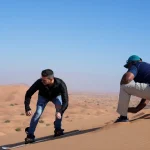
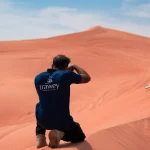
Dubai’s desert sand is red because it contains iron-rich minerals that oxidize, giving the dunes their warm, rusty color. And beneath those shifting layers lies a mix of ancient seabeds, compacted sediments, and mineral deposits that have shaped this landscape over millions of years.
Dubai’s red dunes are the result of millions of years of natural processes, from iron-rich minerals to shifting winds that sculpt the landscape.
In this blog, we break down the science behind these red dunes in simple words. You’ll learn why the color changes across regions, how the desert was formed, and what lies under the surface that most visitors never get to see.
With these insights, Trawey Tours aims to help travelers connect their desert adventure with the fascinating geology that makes Dubai’s dunes so unique.
The Desert Before the Desert
Before Dubai’s dunes existed, this region looked completely different. Millions of years ago, the land was covered by shallow seas, flowing rivers, and layers of soft soil. Over time, these natural systems slowly changed and created the desert we see today.
How It All Started
The Arabian region once sat under warm coastal waters. When the sea slowly pulled back, it left behind shells, minerals, and sediments. Later, rivers coming from the east carried sand and tiny rock particles from the Hajar Mountains.
These mountains were constantly breaking down due to wind, rain, and heat. Every time a rock cracked or crumbled, more minerals were released into the landscape.
How the Red Sand Formed
Among these minerals were iron-rich particles like hematite and limonite. When they mixed with oxygen over thousands of years, they rusted, just like metal does. This natural “rusting” is what gives Dubai’s dunes their famous deep red and orange colors.
How Sand Became a Desert
As the climate grew hotter and drier, plants disappeared and winds took over. Strong desert winds moved loose sand across the land, pushing and piling it into the long ridges and rolling dunes we see today.
Layer after layer built up until the desert became a dominant part of the landscape.
Why Dubai’s Sand Is Red
Dubai’s desert gets its red color from iron in the sand. Each grain carries a thin coating of iron oxide, which is basically natural rust. When the iron in the soil reacts with oxygen over thousands of years, it turns the sand shades of red, orange, and copper.
The Simple Science Behind It
- The sand in Dubai originally came from the Hajar Mountains.
- These mountains contain iron-rich rocks.
- When these rocks break down, the tiny iron particles mix with the sand.
- Sun, wind, and air slowly “rust” these particles and give the dunes their red tone.
How Dubai’s Sand Differs From Other UAE Areas
Not all UAE deserts are red.
- In places like Sharjah or Abu Dhabi, the sand looks yellow or white because it has less iron.
- Dubai’s sand has more minerals and a stronger iron presence, so the color appears deeper and warmer.
It tells another story as well
If you look at Dubai’s sand under a magnifying glass, it isn’t one single color. You’ll see:
- red grains
- brown grains
- clear quartz
- tiny black minerals
This mix shows that Dubai’s desert sand came from many sources, mountains, seas, and rivers, and changed slowly over millions of years.
The Dunes in Motion – Shaped by Wind and Time
Dubai’s dunes are always changing. They are shaped mainly by the wind, which moves sand grain by grain, slowly shifting the landscape over the years.
How the Wind Builds the Dunes
The desert wind lifts sand from one area and drops it in another. Over time, this creates different dune shapes such as:
- Barchan dunes – crescent-shaped dunes formed by steady winds from one direction.
- Star dunes – tall dunes with many arms, formed when winds blow from several directions.
The Role of the Shamal Winds
The Shamal winds, which blow strongly from the northwest, play a big role in shaping Dubai’s desert. These winds:
- push sand across the desert
- build higher dunes
- slowly “move” existing dunes forward each year
Because of this, the desert is never still. The dunes you see today will not look exactly the same next year.
What Lies Beneath
What we see on the surface is only the top of the desert. Under the red dunes, there are several hidden layers that tell the story of how the land changed over millions of years.
The Top Layer: Red Desert Sand
The first layer is the fine red sand we see during the safari. This sand is shaped by the wind and gets its color from iron minerals.
Below the Sand: Older Soil and Minerals
Under the red sand, the desert has:
- Silt and clay layers
- Gypsum and salt deposits
These layers formed when the desert went through dry and wet cycles.
Deep Layers: Ancient Marine Sediments
Further below, the land is made of old marine sediments, proof that this area was once covered by shallow seas and river systems. These sediments belong to very old formations such as the Barzaman layer.
When digging deeper, scientists sometimes find:
- pockets of groundwater
- tiny marine fossils
These are reminders that today’s desert was once an ocean floor.
The Human Connection to the Land
For thousands of years, the desert was not an empty space; it was home, a travel route, and a guide for the Bedouin people.
Their knowledge of the land was deep and practical, built from observing the sand, the sky, and the wind every day.
How Bedouins Read the Desert
Bedouins used the color and texture of the sand to understand where they were and where they needed to go.
- Red sand areas, like Big Red or Al Faya, told them they were near higher dunes formed by older, iron-rich soil.
- Finer yellow sands signaled open flats that were easier for camels to cross.
- Coarse, mixed sands indicated old riverbeds where water sometimes collected.
Navigation Through Nature
Before maps or GPS, Bedouins traveled using:
- Sand-colored patterns
- The direction of the wind (especially the shamal winds)
- Stars at night
- The shape of dunes which indicated common travel routes
Their understanding of the landscape helped them cross long distances safely.
Dubai’s red desert is a place shaped by millions of years of natural history.
Now you know why the sand is red, how the dunes were shaped by ancient seas and strong winds, and what lies beneath the surface. You’ve also seen how people, especially the Bedouins, have always been connected to this land.
At Trawey Tours, we believe the desert becomes even more special when you know the story behind it. That’s why we love sharing these details with curious travelers who want more than just photos.
If you’re ready to explore the dunes with fresh curiosity, join us.
Let Trawey show you the desert’s hidden history, one dune at a time.