Tanoura is a captivating spinning dance often seen at desert safaris and cultural shows in the UAE. But for those who are new to it,
Tanoura is more than just a colorful performance; it is a spiritual art form with deep roots in Middle Eastern history. The dancer’s endless spins, the flowing skirts, and the rhythmic music all carry meanings that go far beyond entertainment.
In this article, we will explore what makes the Tanoura dance so special. We’ll look at its origin and history, the spiritual symbolism behind the spinning, the traditional attire worn by performers, and why this ancient practice continues to inspire audiences today.
This guide will help every guest understand the beauty and purpose behind the dance.
The Origins – A Dance of Devotion
Tanoura began many centuries ago with the Sufi communities of Turkey and Egypt. Sufi dervishes used spinning as a form of meditation. Instead of dancing for an audience, they spun to focus their minds, calm their hearts, and feel closer to the divine.
The idea behind the movement is simple: the dancer keeps turning in one direction, just like the planets circle around the sun. This endless spinning is meant to show the soul’s journey toward peace, balance, and unity with something greater.
Over time, this spiritual practice inspired performers in Egypt, who added colorful skirts and rhythmic music. This version later became known as the Tanoura, which means “skirt” in Arabic. What we see today in the desert camps and cultural shows is a beautiful blend of devotion, history, and artistic expression, all starting from the ancient Sufi whirling tradition.
The Tanoura in Egypt and the UAE
Tanoura as we know it today first took shape in Egypt, where Sufi-inspired whirling slowly transformed into a cultural performance. Egyptian dancers added bright, layered skirts, the “tanoura,” which literally means skirt, and began using color, rhythm, and storytelling to express the spiritual meaning behind the spins.
Over time, this art form travelled across the region and found a special place in the UAE. Here, Tanoura became a signature part of desert entertainment, blending tradition with modern showmanship. The UAE embraced it not just as a performance, but as a way to share Middle Eastern culture with visitors from all over the world.
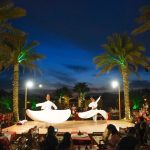
At Trawey, Tanoura is performed by skilled artists who have trained for years to master balance, rhythm, and the symbolic movements of the dance. The spinning skirts, the flowing patterns, and the energy of the performance give guests a close, authentic look at one of the region’s most captivating traditions.
Each show is presented with care, respect, and the intention to keep this meaningful art form alive for future generations.
The Symbolism of the Spin
The heart of the Tanoura dance is the continuous spinning. This movement is more than a performance; it carries deep symbolic meaning. The circular motion represents life’s cycles, the movement of the planets, and the idea that everything in the universe is always in motion.
In the Tanoura tradition, the dancer keeps a steady, calm center while the world spins around them. This stillness symbolizes inner peace, focus, and spiritual balance. It reflects the belief that even when life feels busy or chaotic, a person can find strength by staying centered within themselves.
For many, the spin also represents the soul’s journey toward clarity and connection, a reminder that balance is found not by standing still, but by moving with purpose. This deeper meaning is what makes Tanoura more than entertainment; it becomes an expression of spiritual reflection shared through art.
The Meaning of the Colors
The Tanoura dancer’s skirt is one of the most eye-catching parts of the performance. The bright, layered colors are not just for beauty; each shade carries a meaning from spiritual tradition.
- White represents purity and a clear heart.
- Green stands for faith and spiritual growth.
- Red symbolizes love, energy, and passion.
- Blue reflects infinity and the wider universe.
As the dancer begins to spin, these colors blend together and create moving patterns. This merging of colors is symbolic too; it shows how different parts of life, emotions, and beliefs come together in harmony.
The spinning skirt becomes a visual reminder that unity and balance are created when all these elements flow together as one.
The Music and the Moment
Music is what brings the Tanoura performance to life. The dancer’s spinning connects closely with the rhythm created by traditional instruments like drums, flutes, and hand percussion.
The steady beat of the drum sets the pace. It guides the dancer’s steps and keeps the spin smooth and steady. The soft notes of the flute add emotion and depth, creating a calm and almost dream-like atmosphere.
As the music builds, the energy rises. The rhythm becomes stronger, and the dancer spins faster, creating a powerful visual and emotional moment. This combination of music and movement creates a feeling of focus and peace, almost like meditation.
The Tanoura performance is more than a dance; it is a beautiful blend of history, spirituality, colors, music, and tradition. From its Sufi roots to its place in today’s desert camps, Tanoura continues to inspire guests with its calm, energy, and meaning. Watching the dancer spin under the desert sky connects you to a story that is centuries old.
If you want to experience this art form up close, join us at Trawey Tours. Let our desert evenings introduce you to the magic behind every spin.
Book your desert experience with Trawey and feel the Tanoura story come alive.