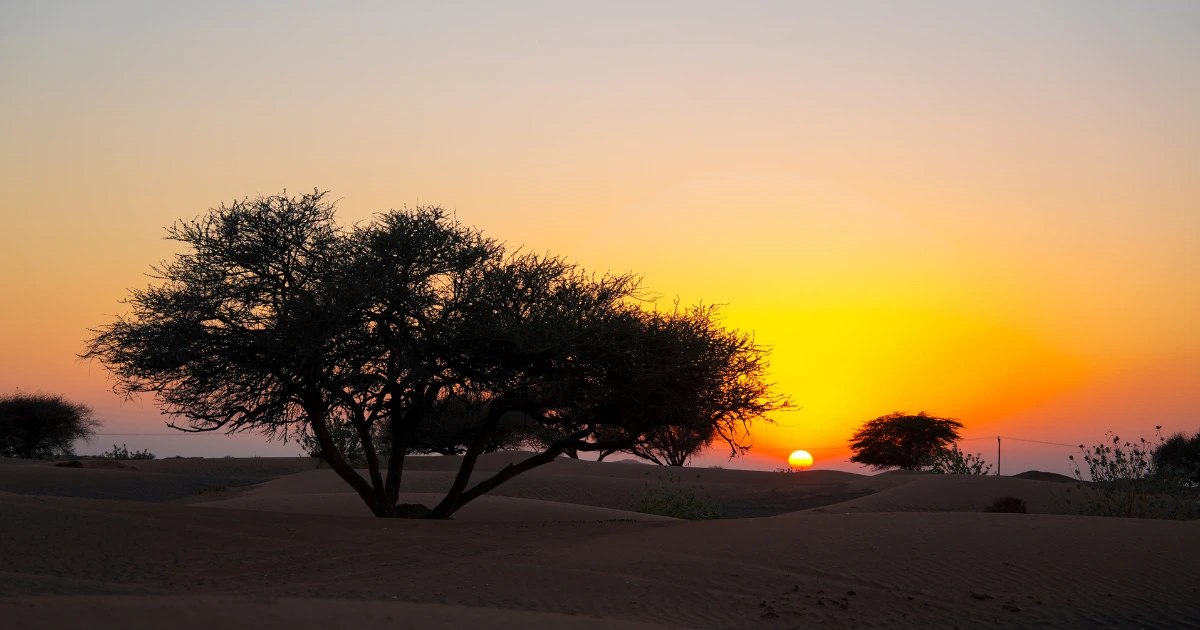
The deserts of the United Arab Emirates are often seen as endless stretches of sand, but they are actually rich ecosystems filled with unique plants, wildlife, and fragile habitats.
These landscapes support species that have adapted to extreme heat, limited water, and shifting dunes. Because the desert environment is delicate, even small disturbances such as uncontrolled driving, waste, or overgrazing can cause long-term damage.
If you are a first-time visitor, we recommend starting with our essential Dubai desert safari guide for beginners to set your expectations.
In recent decades, the UAE has taken strong steps to protect its desert ecosystems. Government agencies like the Ministry of Climate Change and Environment and the Environment Agency – Abu Dhabi have introduced conservation programs, protected wildlife, and established regulated desert reserves. These efforts aim to protect iconic species such as the Arabian oryx and safeguard native plants like the Ghaf tree.
In this article, we will explore the UAE desert ecosystem, the major threats it faces, key government conservation initiatives, wildlife protection programs, and protected areas such as the Dubai Desert Conservation Reserve and Al Marmoom Desert Conservation Reserve. We will also look at how sustainable tourism and responsible desert safaris help protect these landscapes and how visitors can contribute to conservation efforts.
Understanding the UAE Desert Ecosystem
The UAE desert is a complex ecosystem that includes dunes, gravel plains, and salt flats known as sabkha. These environments support wildlife and plants that survive in extreme temperatures and limited rainfall. Because deserts recover very slowly, protecting them is essential for maintaining biodiversity.
Key features of the UAE desert ecosystem include:
- Extreme climate conditions – High daytime temperatures and very low rainfall shape the desert environment.
- Specially adapted wildlife – Animals such as gazelles, desert foxes, and the Arabian oryx survive through unique adaptations of the desert. Learn more about our commitment to camel welfare and ethical tourism.
- Resilient desert plants – Native plants like the Ghaf tree, cactuses and dune grasses help stabilize sand and support wildlife.
- Fragile habitats – Heavy tire tracks, waste disposals, and heavy grazing can damage dunes and vegetation for many years.
Major Threats to the UAE Desert
Although the desert may look vast, its ecosystems are vulnerable to human activities and environmental changes. Rapid development and increased tourism have created several challenges for desert conservation.
Some of the main threats include:
- Urban expansion – Growing cities and infrastructure can reduce natural desert habitats.
- Unregulated off-road driving – Vehicles driving outside designated tracks damage dunes and vegetation. To understand the skills required for safe driving, read about dune bashing vs. dune driving.
- Overgrazing by livestock – In some areas, heavy grazing affects plant growth and soil stability.
- Climate change – Rising temperatures and water stress put additional pressure on desert wildlife and plants.
Government-Led Desert Conservation Efforts
The UAE government plays a major role in protecting desert ecosystems through policies, reserves, and long-term conservation programs. These efforts focus on preserving habitats, regulating human activity, and restoring wildlife populations. Key government-led conservation efforts include:
- Protected reserves and conservation zones – Areas like the Dubai Desert Conservation Reserve are established to protect natural habitats while allowing controlled tourism and research.
- Dubai Desert Conservation Reserve programs (DDCR) – This reserve runs structured conservation programs that include:
- Wildlife monitoring and research to track species like the Arabian oryx.
- Habitat restoration to maintain dunes and native vegetation.
- Controlled tourism activities to reduce environmental impact.
- Educational programs that inform visitors about desert ecology.
- Environmental laws and regulations – The UAE enforces rules on hunting, off-road driving, and land use to prevent damage to fragile desert ecosystems.
- Government authorities and monitoring – Organizations such as the Ministry of Climate Change and Environment and Environment Agency – Abu Dhabi lead conservation policies, research, and environmental protection programs.
- Global partnerships – The UAE collaborates with international conservation bodies to improve biodiversity protection and adopt best practices.
These combined efforts ensure that desert conservation is not only regulated but also actively managed, making the UAE a leading example of how governments can protect fragile ecosystems while supporting sustainable tourism.
Wildlife Conservation and Protection
Wildlife protection and conservation in Dubai are focused on endangered wild species in the desert and protecting them. One of the most successful conservation stories in the UAE is the protection and reintroduction of the Arabian oryx. Once extinct in the wild, this species now thrives in managed desert reserves thanks to long-term conservation programs.
Wildlife protection efforts in the UAE include:
- Arabian oryx reintroduction programs that have restored stable populations in protected areas.
- Protection of gazelles and desert foxes through breeding programs and habitat management.
- Monitoring migratory birds that travel across desert wetlands and seasonal habitats.
- Research and conservation programs that track wildlife health and population growth.
These initiatives from the UAE government help maintain biodiversity and ensure that native species continue to survive in their natural environments.
Protecting Native Desert Plants
Desert plants play an essential role in maintaining the ecosystem. They stabilize dunes, provide shelter for wildlife, and help maintain soil health. Protecting native vegetation is therefore a key part of UAE conservation programs.
Important plant conservation efforts include:
- Protection of the Ghaf tree, the national tree of the UAE and a symbol of resilience in desert conditions.
- Programs to reduce overgrazing, allowing plants to regenerate naturally.
- Habitat restoration initiatives in protected desert areas.
By safeguarding native plants, the UAE helps maintain the balance of its desert ecosystems. You can discover more about the cultural side of Dubai desert safaris by exploring these native landscapes.
Protected Desert Areas in the UAE
The UAE has created several protected desert areas to protect wildlife, natural landscapes, and fragile ecosystems. These reserves are carefully managed by the government, which means tourism is controlled and activities are regulated.
Some of the most important protected desert areas include:
- Dubai Desert Conservation Reserve – A protected reserve where tourism is regulated and wildlife conservation programs are actively managed.
- Al Marmoom Desert Conservation Reserve – A large conservation area that combines wildlife protection with sustainable recreation activities.
- Al Wathba Wetland Reserve – A protected habitat known for birdlife and environmental research.
These reserves also serve as educational spaces where visitors can learn about desert ecology and conservation, often explored during a morning desert safari or sunrise desert safari.
Role of Sustainable Tourism in Desert Conservation
When you visit the UAE desert, your choices directly affect the environment. The desert may look strong and endless, but it is actually very sensitive. A single off-track drive, litter, or disturbance to wildlife can damage the ecosystem for years. This means every traveler has a role to play in protecting it.
Sustainable tourism makes it possible to enjoy the desert while keeping it safe. When you choose responsible experiences, especially in places like the red dunes of Lahbab, you are actively supporting conservation efforts.
Here’s how your travel choices can make a difference:
- Choose licensed and eco-friendly tour operators that follow conservation rules.
- Follow the “leave no trace” principle by avoiding littering or damaging plants.
- Stay on designated tracks during dune bashing.
- Avoid feeding or chasing wildlife, which can harm animals and disrupt their behavior.
- Support conservation centers and educational programs that promote environmental awareness.
Why Desert Conservation Matters for the Future
Protecting the UAE’s desert landscapes is more important for both the nature and culture. The desert is deeply connected to the country’s heritage, from traditional Bedouin life to historic trade routes. Proper conservation ensures that this environment continues to support wildlife, education, and sustainable tourism.
Main reasons why desert conservation matters include:
- Preserving biodiversity and unique desert species.
- Protecting cultural heritage linked to desert life and traditions.
- Supporting climate resilience and sustainable land management.
- Educating future generations about environmental responsibility.
The deserts of the United Arab Emirates are living ecosystems that require careful protection. Through conservation programs, wildlife reintroduction, protected reserves, and sustainable tourism initiatives, the UAE has taken significant steps to safeguard its desert environment. Efforts led by government organizations, conservation scientists, and responsible tour operators have helped restore wildlife populations and protect fragile habitats.
By understanding these conservation initiatives and respecting the rules that protect desert landscapes, visitors can enjoy the dunes while helping to preserve them for future generations. For a mindful family experience, consider a family-friendly desert safari.
Book your desert safari with Trawey Tours and enjoy the safari responsibly. Book your desert safari in Dubai today!