You do not need to buy the headscarf at the desert safari rest stop in Dubai. It is not mandatory for dune bashing, not a cultural requirement for tourists, and not essential for safety in most cases. If you are a first-time visitor, we recommend starting with our essential Dubai desert safari guide for beginners to understand what to expect.
However, many travelers feel unsure when they reach the rest stop. Vendors often present the headscarf as something you “need,” which creates confusion, especially for first-time visitors. This is where many people end up buying it without knowing its actual purpose or price.
In this guide, we will explain what really happens at the rest stop, what the headscarf is used for, why it is often unnecessary, when it might make sense to buy one, and what you should bring instead to stay comfortable during your desert safari.
What Happens at the Desert Safari Rest Stop?
The desert safari rest stop is a short break where travelers pause before the main dune bashing experience in the red dunes of Lahbab. It usually lasts around 10–15 minutes and gives you time to relax and explore briefly.
- Quick stop after pickup, before entering deeper desert areas.
- Briefing about the desert activities and safety instructions. Professional drivers will explain dune bashing vs. dune driving.
- Basic facilities like restrooms and small seating areas.
- Opportunity to take photos on nearby dunes. Check our desert photography guide for tips.
- Small vendor stalls selling accessories.
- Last chance to upgrade to activities like a 1-hour buggy tour.
This stop is mainly for convenience, but it is also where most sales interactions happen.
What Is the Headscarf They Sell?
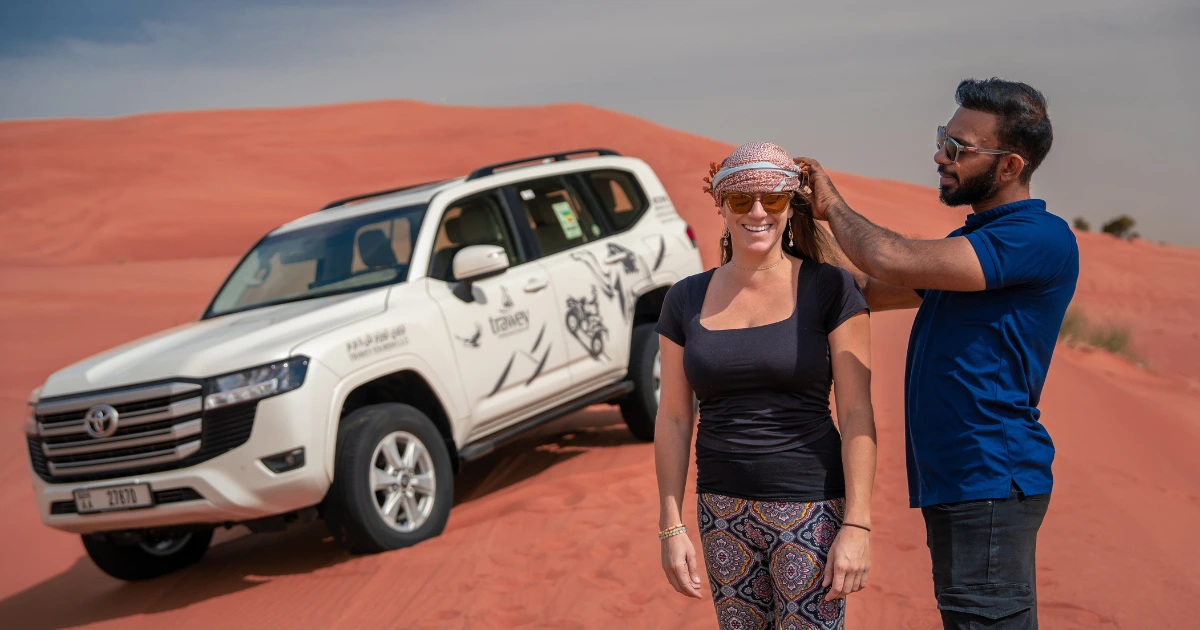
The headscarf sold at rest stops is usually a traditional-style scarf, commonly known as a shemagh or ghutra. It is lightweight and designed for basic sun and sand protection.
- Made from thin cotton fabric.
- Used traditionally in desert regions.
- Helps block sunlight and light sand.
- Popular for desert-style photos.
It’s important to understand the following:
- It is not required for dune bashing.
- It is not mandatory for tourists.
- It is mostly an optional accessory.
Why You Should Think Twice Before Buying It There
You should think twice before buying the headscarf at the rest stop because it is often overpriced and not essential for your experience.
- Higher prices at rest stops: Scarves can cost AED 50–150 or more. Similar items in the city are much cheaper.
- Not needed for dune bashing: Vehicles are closed 4x4s with air conditioning. Sand exposure inside the vehicle is minimal. Review who should avoid a desert safari for health guidelines.
- Sales pressure can feel urgent: Vendors may say you “need it” for the desert. This creates a sense of urgency for first-time travelers.
- Better alternatives already exist: Most people already have basic sun protection items.
This doesn’t mean the scarf is useless; it just means you should make a choice based on need, not pressure.
When Buying a Headscarf Actually Makes Sense
Buying a headscarf can make sense in certain situations, especially if you want it for comfort or style:
- You want traditional desert-style photos.
- You plan to do quad biking or open-air activities. Review our quad biking safety tips first.
- You forgot sun protection necessities.
- You like to keep it as a souvenir.
In these cases, it becomes a personal choice rather than a necessity.
How Much Should a Headscarf Cost in Dubai?
Prices can vary depending on where you buy it. Here is a simple comparison:
- Rest Stop: AED 50–150 (Limited options, higher markup).
- City markets (souks): AED 15–40 (Better variety and value).
- Shopping malls: AED 30–80 (Branded or higher-quality options).
- Online platforms: AED 10–30 (Most affordable).
What You Should Bring Instead
Instead of buying items at the rest stop, it’s better to come prepared with essentials:
- Sunglasses for eye protection.
- Sunscreen (SPF 50+).
- Light scarf or bandana from home.
- Cap or hat for sun protection.
- Comfortable, closed-toe shoes.
- Light, breathable clothing.
Review what to eat before a desert safari and how much water to drink during a 6-hour safari to stay prepared.
How Trawey Tours Handles Rest Stops
Trawey Tours handles rest stops in a transparent and guest-focused way. Whether you are on an evening desert safari with BBQ dinner or a sunrise desert safari, your comfort comes first.
- Clear communication that all purchases, including headscarves, are completely optional.
- No pushy sales behavior from guides or staff.
- Honest guidance on what you actually need for the safari.
- Enough time to relax, take photos, and use facilities without feeling rushed.
- Focus on providing a smooth experience rather than encouraging unnecessary spending.
This approach is part of our family-friendly desert safari commitment.
Frequently Asked Questions
No, it is completely optional and not required for the experience.
Yes, it is traditionally worn in the region, but tourists are not expected to wear it.
Yes, bringing your own scarf or bandana is a better and more affordable option.
No, there is no requirement for women to cover their hair during a desert safari.
Wear light, comfortable clothing, sunglasses, sunscreen, and closed shoes. A scarf is optional.
Buying a headscarf at the rest stop is not necessary for most travelers. By preparing in advance, you can focus on enjoying the desert experience. We also cater to large groups and offer private desert safaris for more exclusivity.
Book your desert safari with Trawey Tours and enjoy your safari without unnecessary spending. Book your desert safari in Dubai today!